Nvidia introduces NVIDIA Vera Rubin platform for scientific supercomputing
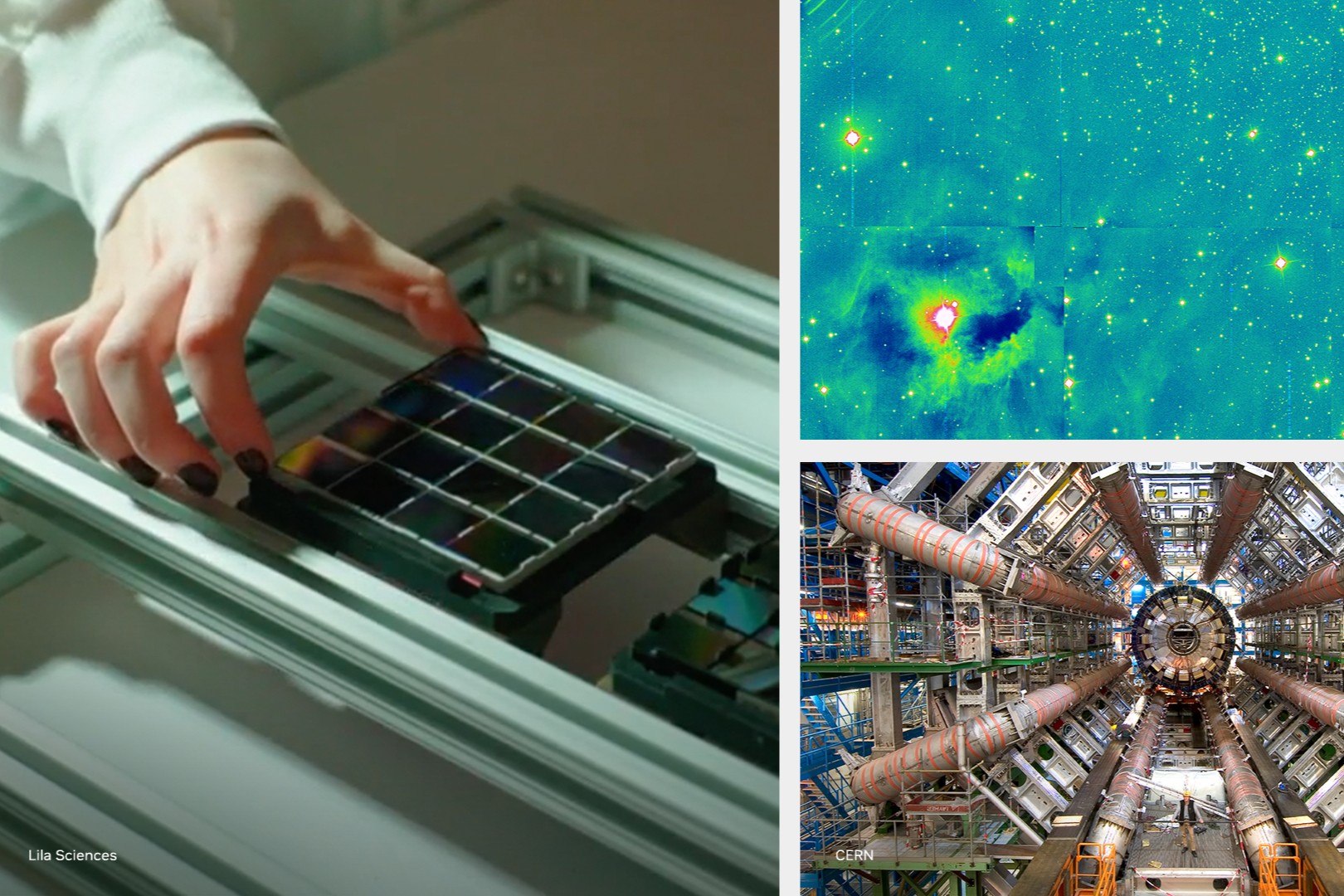
Nvidia announced the NVIDIA Vera Rubin platform for scientific computing at ISC High Performance 2026 in Hamburg, combining native double-precision FP64 performance, NVIDIA CUDA-X libraries, and the capabilities of the NVIDIA AI platform.
Nvidia said Vera Rubin brings together its accelerated computing stack, from hardware to software and optimized scientific libraries, to accelerate AI, simulation, and data-intensive research. The company said the platform is designed to turn each system rack into a supercomputer for scientific discovery and industrial innovation.
Nvidia designed Vera Rubin to unify high-fidelity simulation, AI, and data analytics. The platform targets workloads including climate modeling, computational fluid dynamics, quantum chemistry, and energy exploration.
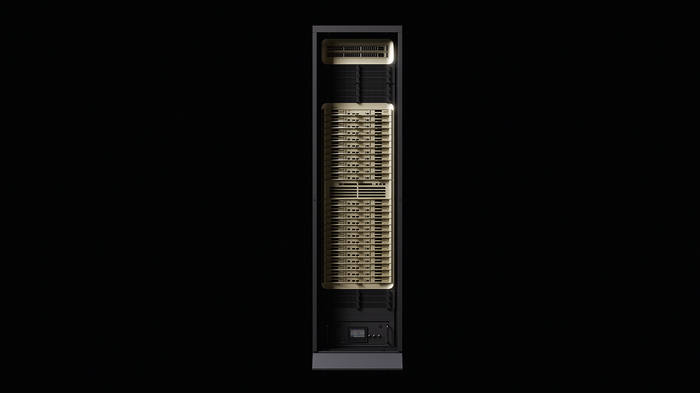
Nvidia said a Vera Rubin supercomputing system delivers more than 7 exaflops for scientific AI workloads and 5 petaflops of native FP64 support, along with high memory bandwidth and up to 144 GPUs. The company said the system can deliver performance comparable to systems listed on the TOP500 ranking of the world’s most powerful supercomputers.
“Scientific discovery is now a race between the complexity of the world’s greatest challenges and the computing systems built to solve them,” said Jensen Huang, founder and CEO of Nvidia . Huang said NVIDIA Vera Rubin is “a new instrument for science” that brings simulation, AI, and data processing together to help researchers and industries design and discover faster.
The NVIDIA Vera Rubin platform combines NVIDIA Rubin GPUs and NVIDIA Vera CPUs connected through NVIDIA NVLink-C2C high-speed interconnects. The architecture also includes NVIDIA ConnectX-9 SuperNICs and NVIDIA BlueField-4 DPUs in a direct liquid-cooled design.
For scientific computing, Vera Rubin provides native FP64 capabilities to accelerate simulations that require high precision. The platform also provides AI performance for surrogate models, scientific foundation models, and AI-assisted analysis.
According to Nvidia, researchers can use one platform to run traditional numerical solvers, train and deploy AI models, stream data from instruments, and connect simulation to real-time analytics.
Leading supercomputing centers and industrial innovators are adopting Vera Rubin to build a new generation of AI and high-performance computing systems. At the Leibniz Supercomputing Centre, Blue Lion will be powered by the NVIDIA Vera Rubin platform and second-generation HPE Cray exascale-class supercomputing. Nvidia said the system will deliver nearly 30 times the computing power of LRZ’s current system and is scheduled to begin operation in 2027, supporting research in astrophysics, environmental science, and life sciences.
Bull, Dell Technologies, GIGABYTE, HPE, and Supermicro are bringing the NVIDIA Vera Rubin NVL4 platform to market through direct liquid-cooled AI and HPC racks. The racks are designed to help research institutions, national laboratories, and enterprises deploy accelerated computing at rack scale.
Nvidia said the systems expand its accelerated computing ecosystem for scientific discovery and provide a common platform for simulation, AI, data processing, and visualization, from single-rack deployments to large-scale supercomputing centers.
Nvidia expects NVIDIA Vera Rubin NVL4 systems from global system manufacturers to become available in the fourth quarter of this year.