More than a number: Why dimming zone count actually matters

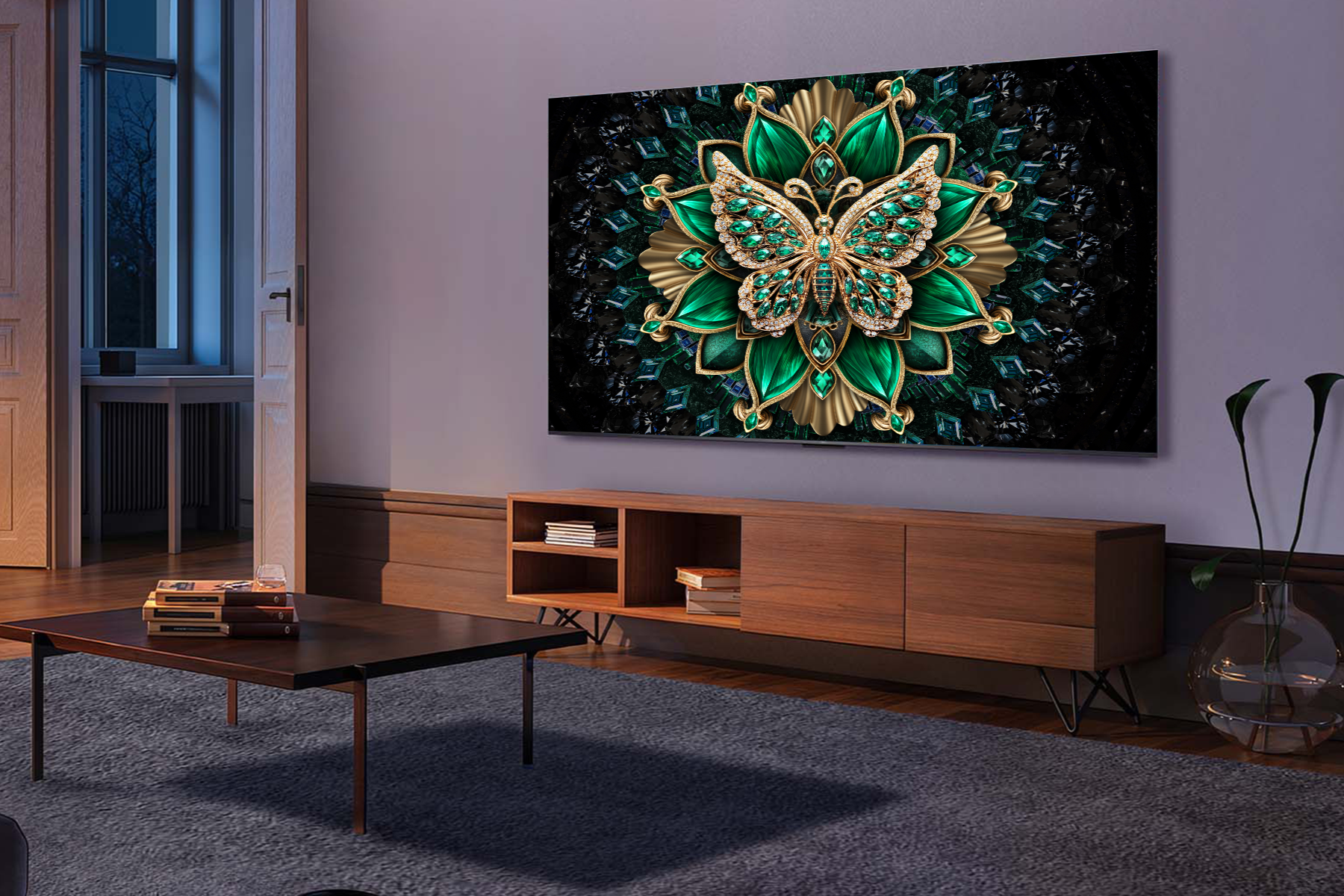
If hardware local dimming answers the question of whether a television can control light and shadow independently at all, dimming-zone count answers a different, equally important question: how precisely can it do it? It is the second half of the story and it is the one shoppers are least likely to hear about unprompted.
Think of it as a second resolution for light, not pixels

A useful way to think about zone count is as a kind of second, hidden resolution running underneath the one printed on the box. Screen resolution describes how finely an image is divided into pixels of color. Zone count describes how finely the backlight behind that image is divided into independently controlled patches of light. Even a panel with a few hundred zones meaningfully improves contrast and brightness over a conventional, non-zoned LCD backlight. As that count climbs into the thousands, the improvement compounds: the backlight can resolve much finer detail at the point where light and dark meet, isolating a single bright object from the darkness immediately surrounding it with far greater precision.
Where it actually shows up on screen
This is not an abstract engineering distinction – it is directly visible in ordinary viewing situations. A conventional LCD backlight with no local dimming at all typically shows grey, washed-out blacks in these scenes, since it has no way to lower brightness in just the darker parts of the frame. Introducing local dimming zones changes that: night driving scenes, fireworks against a dark sky, a single lit window in an otherwise dark room, and a football match played under floodlights are exactly the situations where the number of zones makes a visible difference.
So, what number is actually good?
There’s no single industry-wide threshold, and the “right” number scales with panel size and intended use – but as a rough map of where the market sits today, Mini LED sets often run in the low hundreds of zones, better mid-range panels move into the thousands, and premium panels can run from roughly five thousand zones upward.
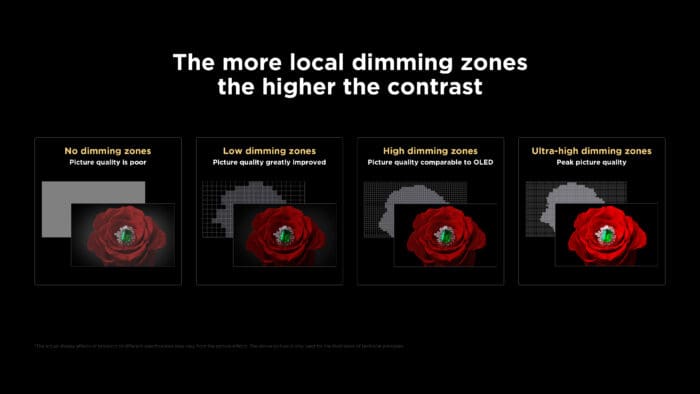
TCL’s own reference materials, for instance, illustrate the jump from “hundreds of zones” through “thousands” to “over five thousand,” and show how much more precisely a rose or a night sky can be rendered as that count climbs a useful visual for what is otherwise an abstract number.
A number worth asking for
Zone count will not be printed on the box, and depending on the model and the brand, it is not always volunteered unprompted though many manufacturers do list it on their technical spec sheets for anyone who asks, particularly on higher-specification models. As a rule of thumb, and with other major conditions comparable, more zones enable finer backlight control, which can contribute to better contrast and shadow-detail performance.