MWC26 Doha draws over 10,000 attendees as GSMA and ITU events converge
MWC26 Doha closed on November 10, 2026, after welcoming more than 10,000 attendees from 100 countries and territories to Qatar for three days of exhibitions, discussions, networking, and deal making. The event was hosted in partnership with Qatar’s Ministry of Communications and Information Technology.
GSMA said delegates explored how embedded intelligence, next-generation infrastructure, and national digital strategies are reshaping the role of the Middle East and North Africa within the global connectivity ecosystem.
MWC26 Doha runs alongside ITU PP-26
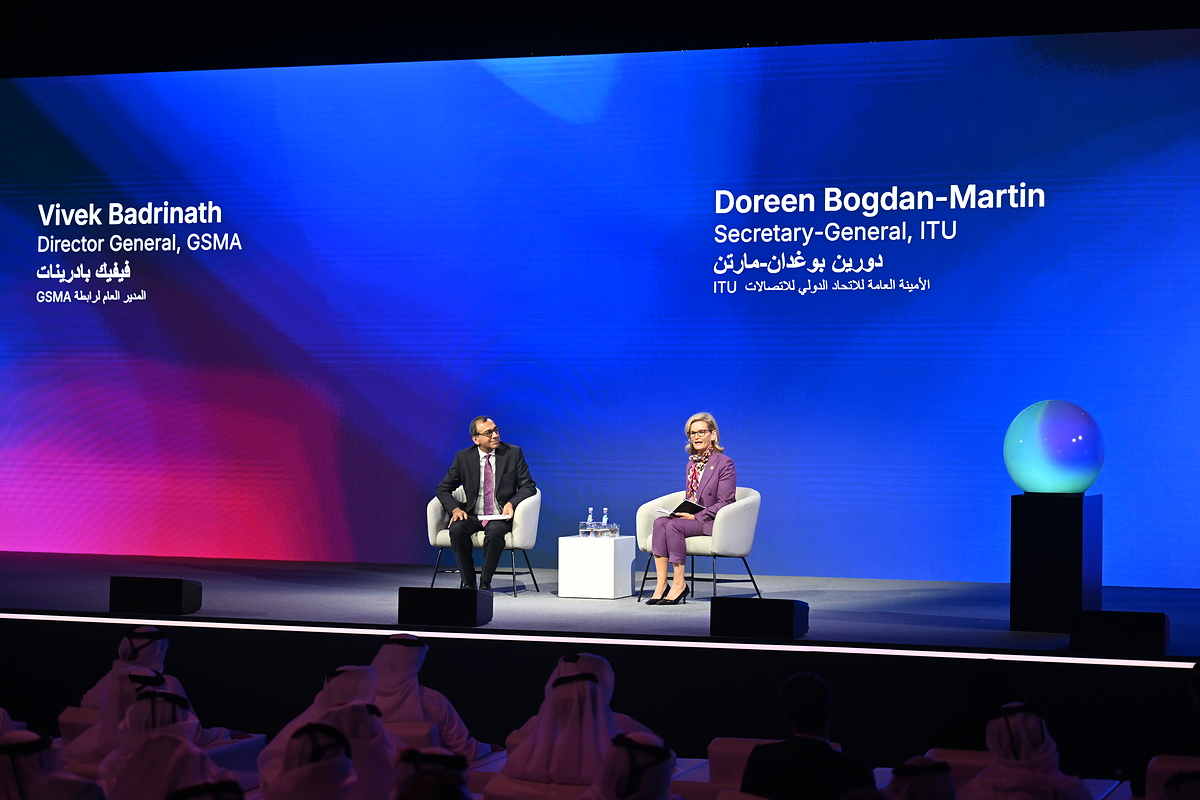
In what GSMA described as a first-of-its-kind co-location, MWC26 Doha ran alongside the opening days of the ITU Plenipotentiary Conference, PP-26.
PP-26 is the principal governing conference of the International Telecommunication Union, the UN agency for digital technologies. Held every four years, it determines the ITU’s strategic and financial plans, elects its leadership, and sets its overall direction.
GSMA said the co-location brought together industry leaders, policymakers, regulators, and technology companies around issues affecting the global digital economy.
More than 10,000 attendees and 86 government delegations
According to GSMA, MWC26 Doha welcomed more than 10,000 unique attendees from 100 countries and territories. Around 14% of attendees were C-suite executives, while 37% were director level or above.
GSMA said 62% of attendees represented sectors adjacent to the core mobile ecosystem, indicating participation from industries beyond traditional telecom.
The GSMA Ministerial Programme convened 86 delegations, including 36 ministers and 34 heads of national regulatory authorities. In total, 74 countries and 12 intergovernmental organizations were represented.
The event also featured 195 speakers across keynote sessions, summits, and partner programs, alongside approximately 100 exhibitors, sponsors, and partners on the show floor.
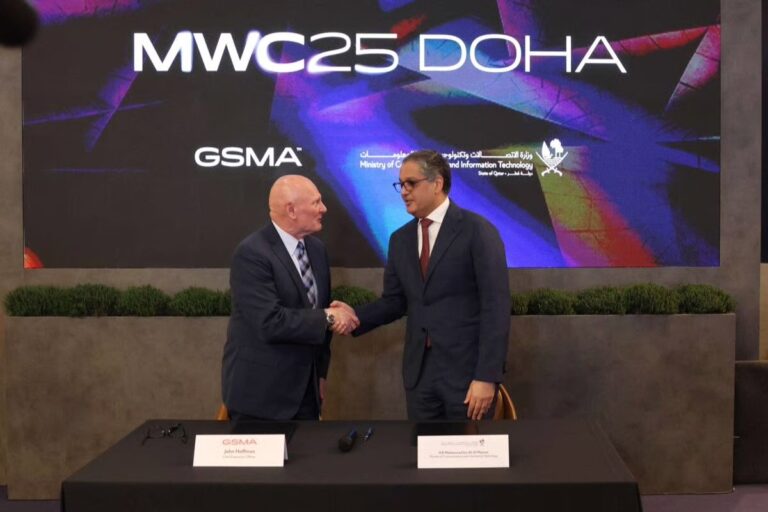
GSMA said 42 partnerships and announcements were signed in the event’s Announcement Lounge, while more than 220 media representatives, content creators, and industry analysts attended on site.
5G emergency-response demonstration
At the GSMA Pavilion, Ooredoo Qatar, Ericsson, Eonetics, Hikvision, and GSMA demonstrated applications of advanced mobile connectivity for emergency response.
One demonstration linked an Eonetics tethered drone in Melbourne with the GSMA Pavilion in Doha across a distance of more than 12,000 kilometers to demonstrate a 5G-enabled emergency-response scenario.
GSMA launches AI for Impact MENA Initiative
GSMA also launched the AI for Impact, or AI4I, MENA Initiative, intended to bring together mobile operators, governments, international organizations, academia, and private-sector partners around the development and scaling of AI-powered services in the region.
According to GSMA, the initiative will focus on responsible and inclusive AI adoption through partnerships and skills development.
Partnerships with AMD, ITU, universities, and other organizations
GSMA announced or signed a number of collaborations during the event. These included work with Khalifa University and AMD on radio-frequency foundation models for telecom operators and an agreement with the ITU focused on trusted, open AI for telecom.
Other collaborations included Axonect on operator-led digital marketplaces for small businesses, Applab on a five-year commitment to MWC Doha, and an initiative involving Côte d’Ivoire focused on smartphone affordability.
GSMA Foundry and apoQlar also announced work intended to bring spatial computing into connected healthcare.
Vivek Badrinath, Director General of the GSMA, said MWC26 Doha remains part of the organization’s efforts to bring the mobile ecosystem together around issues ranging from global network standards to expanding connectivity to people who remain offline.