NetApp unveils Novus for AI factories at 100+ TB/s speeds
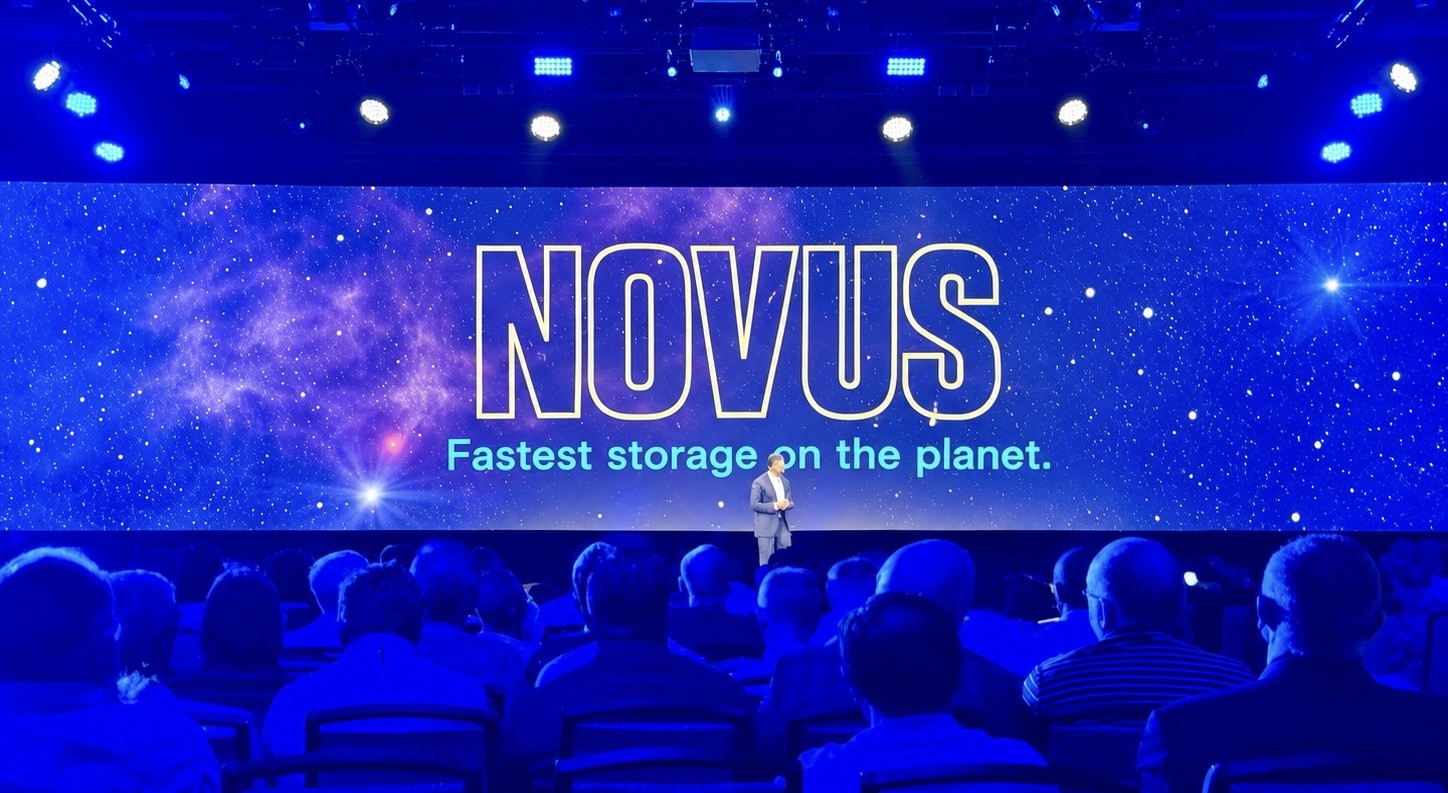
During NetApp INSIGHT 2026 in Las Vegas, attended by the Mena Tech team, NetApp unveiled NetApp Novus, a new storage architecture designed for AI infrastructure providers operating large GPUs environments. Novus aims to address the storage bottlenecks that can limit the efficiency of AI factories at scale.

A Storage Architecture Designed for AI Factories
NetApp said Novus is built to support a zettabyte-scale file system and continuously feed large GPU environments with data, helping maximize compute resource utilization and improve infrastructure efficiency. The company described its new platform as the fastest storage architecture on the planet for this type of workload.
The launch of Novus is intended to address an issue affecting GPU utilization, as traditional storage architectures become a limiting factor when Neoclouds and GPU-as-a-Service providers build AI factories at scale. According to NetApp, GPU utilization can fall below 30% when storage systems are unable to deliver data quickly enough.
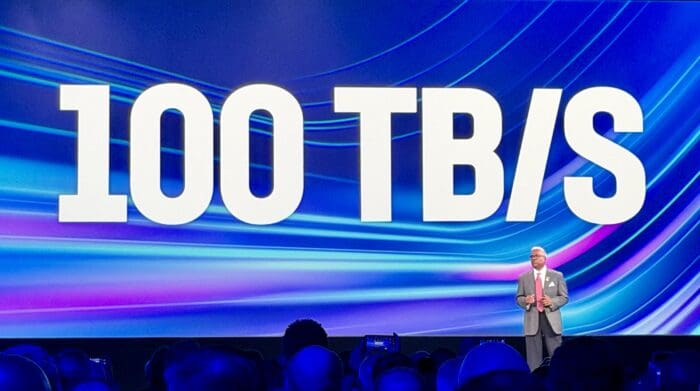
During the keynote at NetApp INSIGHT 2026, George Kurian, CEO of NetApp, positioned the announcement as one of the most significant shifts in the company’s strategy, describing it as “the most important announcement we have made in a very long time, and certainly the most important announcement at INSIGHT 2026.” “He noted that the era of accelerated computing is reshaping data system design, driving the need for an architecture where performance and components can scale independently.
How Does NetApp Novus Work?
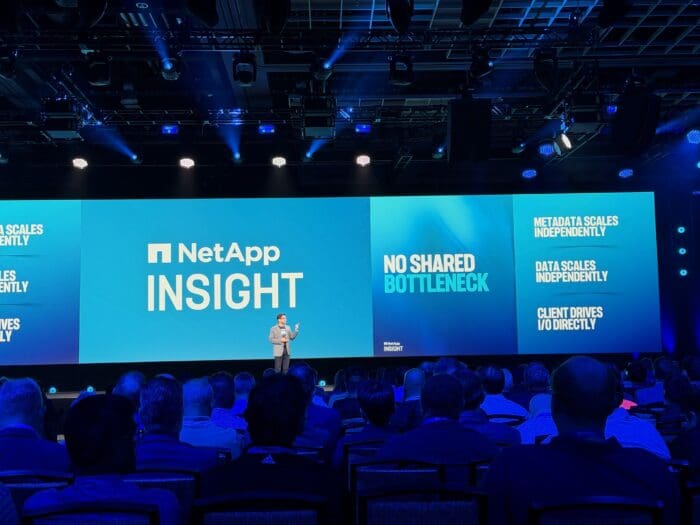
The Novus platform separates metadata from the data path, allowing performance, capacity, and concurrency to scale independently under a single namespace using industry-standard NFS. The initial release combines NetApp Novus Data Director, the platform’s metadata software running on qualified Supermicro infrastructure, with NetApp ONTAP data services delivered through AFF A90 systems.
Keeping GPUs Productive
According to NetApp, the architecture is built to exceed 100 TB per second of aggregate throughput and support high utilization of hundreds of thousands of GPUs in large-scale AI environments, while preserving the enterprise data services provided by ONTAP. It is also designed to meet the requirements of multi-tenant, cloud-scale AI factories.
NetApp said Novus is designed to keep GPUs productive by separating metadata services from the data path, reducing storage-related bottlenecks, and keeping AI infrastructure fed with high-performance data. The platform also enables billions of files and massive AI datasets to grow under a single namespace, while allowing metadata, bandwidth, and capacity to scale independently. This helps reduce storage fragmentation and operational complexity.
In addition, Novus allows AI infrastructure operators to scale resources according to the requirements of each workload. According to the company, this can help reduce power, space, and infrastructure overhead while preserving resiliency, security, and multi-tenant capabilities.
Syam Nair, Chief Product Officer at NetApp, said AI factories require a storage architecture purpose-built to keep pace with new levels of scale, rather than relying solely on systems developed for high-performance computing environments. He added that Novus is designed to deliver up to 100 TB per second of performance and support the data requirements of large-scale GPU environments.

With investment in GPUs and AI infrastructure rising sharply, NetApp is betting with Novus that storage will become a fundamental part of the AI factory efficiency equation, rather than simply a back-end layer for storing data. If the new architecture delivers the performance and scalability levels announced by the company, it could help infrastructure providers increase GPU utilization while reducing some of the complexity and costs associated with scaling these environments.