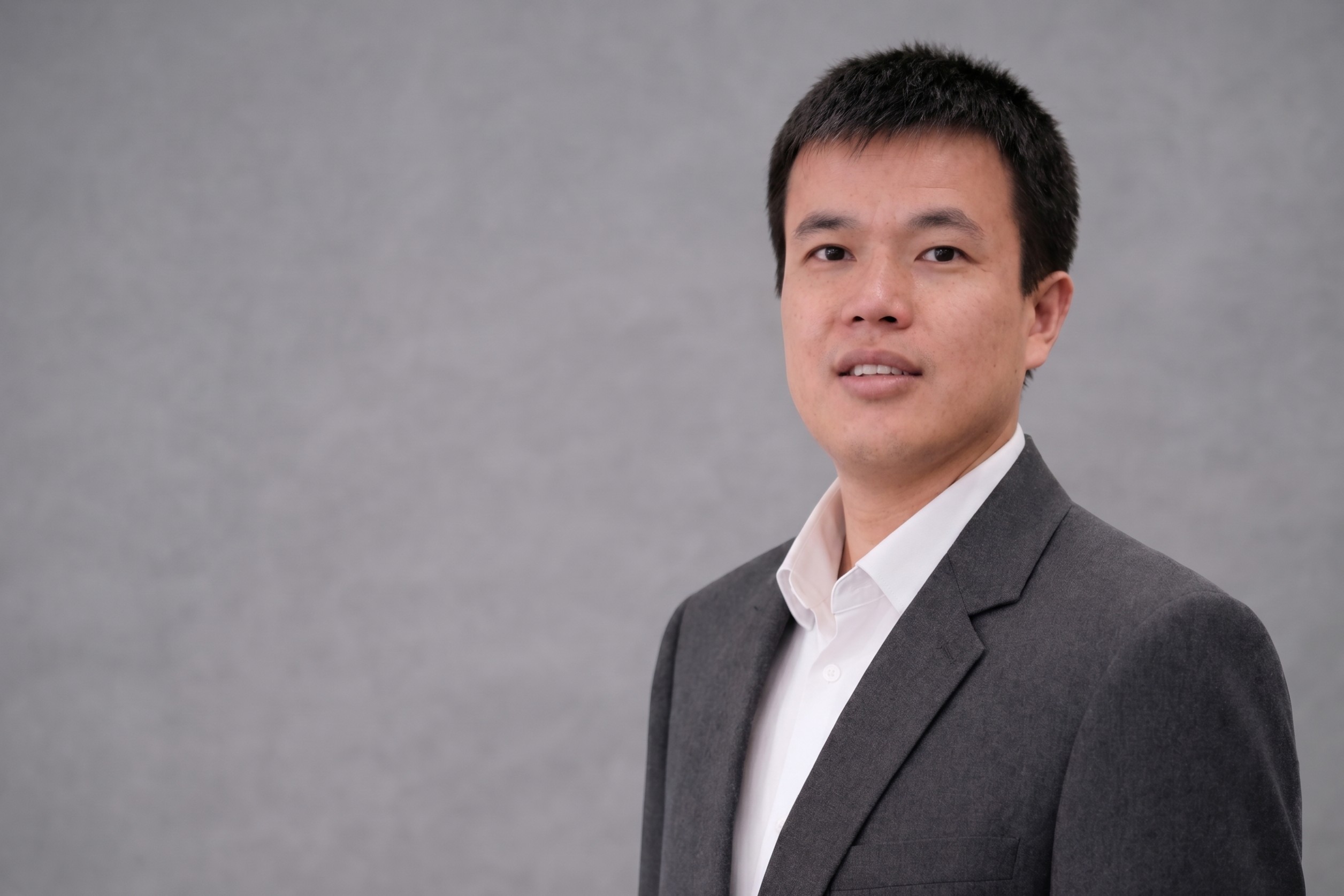
Suliman Gouda on turning industrial AI into measurable results

As AI Everything Abu Dhabi 2026 brings together global innovators, tech leaders, and policymakers at ADNEC to explore the future of sovereign AI, data governance, and smart governance, the event serves as a premier platform for addressing today’s most pressing technological challenges. Within this context of rapid advancement, the focus for heavy industries remains squarely on practical execution and operational performance. Addressing how high-tech solutions apply to complex asset operations, Suliman Gouda, Regional Vice President, AI – APJ MEA at IFS, shared key insights on driving real business value.
In this Q&A, Gouda talks about their participation in AI Everything 2026 and shares insights on AI adoption across the MENA and Asia-Pacific/Japan regions. He also explores how AI agents are transforming industrial workflows and stresses the need to preserve critical technical expertise as senior workers retire.
Where are you seeing the most meaningful enterprise adoption today across APJ and MEA?
It helps to start with who we serve. IFS is an industrial AI and software company focused on asset-intensive and project-intensive organizations with mission-critical operations. That includes technicians, assembly-line operators, maintenance crews and engineers. For them, AI is meaningful if it changes what they do on the next shift.
We focus on six industries: energy, utilities and natural resources; aerospace and defence; telecommunications; manufacturing; service industries; and construction and engineering. Across those industries, we see adoption in five main areas.
The first is the full asset lifecycle, from investment and design through construction, commissioning, operation and decommissioning. It also includes the people, parts, warehouses, contracts and permits around an asset. Bringing that information together is a foundation for applying AI.
The second is field service execution and data capture. An asset reports on itself through connected devices, operational systems and the people who work on it. The bottleneck is the quality of that information, not simply how much is collected.
The third is supporting the people doing the work: safety, competence, permits, knowledge transfer, and access to the right part and procedure at the right moment. At Kodiak Gas Services, for example, a Digital Worker helps technicians find and request parts, reducing time spent on administrative tasks.
The fourth is supply chain disruption, where delays affect cost and schedules. The fifth is sustainability, where maintaining assets and connecting operational data can help organisations understand and address emissions.
The pattern across both regions is the same: adoption is strongest where the asset is the business.
What separates successful AI deployments from projects that fail to scale?
A useful starting point is whether a project has an accountable owner, a performance indicator it must improve and a budget line it is supporting. Without those, useful technology can remain at the proof-of-concept stage.
In industrial AI, the outcome often already has a name and a number: first-time fix rate, unplanned downtime, freight cost per shipment or days of parts cover. Somebody is already responsible for that performance, and the cost of getting it wrong is visible in the business.
That gives the deployment a concrete purpose. For Kodiak, it is helping technicians obtain parts. At Kitron, Digital Workers support supply chain workflows such as inventory replenishment and supplier coordination. These are specific tasks within an existing operation.
The pace of adoption matters too. We are seeing customers move from an initial use case to a second and third as they establish value. The important question is whether the first deployment solves a problem clearly enough to justify expanding it.
Too often, projects struggle because nobody decided who owned the outcome before the money was spent.
How is AI changing decisions in manufacturing, energy, aviation and other asset-intensive businesses?
It is shortening the distance between something happening and someone being able to act on it. IFS.ai Operational Intelligence brings together information from industrial control systems, historical operating data, manufacturing systems, enterprise asset management and enterprise resource planning. The aim is to give teams a shared, current view of operations. Shift handovers are a practical example: people can make better-informed decisions when they know what happened on the previous shift.
In logistics, IFS.ai Logistics, by 7bridges, helps turn freight information into decisions teams can make during operations. Automated checks against rate cards can flag issues such as duplicate charges, incorrect rates and missed deliveries sooner.
For emissions, much of the information an organisation needs is already inside its operational systems. IFS Zero connects that data to support measurement and reporting.
IFS Loops is focused on carrying out routine work. A material replenishment agent, for example, can raise a parts request rather than only recommend one, with an audit trail of its actions. The benefit is time returned to the team.
There is also a broader change in how existing systems are used. Years of enterprise resource planning, asset management, and maintenance, repair and overhaul data can become available to agents that help people interpret it and take action.
IFS Nexus Black addresses problems that need a tailored approach. Resolve supports fault reporting across different types of information and AI-guided fault resolution on complex assets. Comply applies a related approach to regulated environments, with a focus on generating audit evidence continuously.
As global leaders gather at AI Everything, which conversations matter most for turning AI innovation into large-scale impact?”
AI Everything, there are four conversations I want to have. The first is the growth in physical assets. Every new machine comes with parts, a maintenance history, a warranty, compliance requirements and potential failure modes. Organisations need a way to manage that complete picture as their operations grow.
The second is the knowledge leaving industry. When experienced technicians retire, their diagnostic judgement can leave with them. AI agents offer a way to support the technicians who remain and retain more of that knowledge.
A related development is intelligence moving into equipment itself: smaller models that could operate offline in remote locations, helping an asset monitor and diagnose its own condition. This is still early. The examples I am referring to are research previews and partner proofs of concept, rather than established production systems.
The third is data capture and service quality. AI inherits the gaps in the data it receives. Remote monitoring can be intermittent, and that has consequences for the reliability of predictions. Better models alone do not resolve missing or inconsistent operational information.
The fourth is speed: how quickly a team can move from identifying a problem to applying a solution and demonstrating its value. I would like fewer conversations about models and more about outcomes with owners.