Why Software Will Define the Next Era of Mobility?

Guest article by Luis De La Cruz, Managing Director, Digital Services and Experiences General Motors Africa and Middle East.
For more than a century, the car was defined by what you could touch; steel, engine, and horsepower. A vehicle’s value was locked in at the factory, and once it left the assembly line, it was essentially finished.
That era is over. Today, one of the most important things about a vehicle is what is running inside it. Software is rapidly becoming the primary differentiator in automotive, and I believe it will reshape mobility more profoundly than electrification itself.
From Product to Platform
The traditional automotive model was simple: design, build, sell, and repeat. A vehicle was a static product. Once delivered, it did not improve. It degraded.
Software changes that equation entirely. A software-defined vehicle (SDV) is not a product- it is a platform. Like a smartphone, it can learn, evolve, and deliver new capabilities long after it leaves the factory. Features that once required a dealer visit or a new model year can now be deployed overnight, directly to the vehicle, over the air.
The Architecture Underneath
Making this possible required rethinking the vehicle from the ground up. For decades, vehicles were built on highly distributed architectures — dozens, sometimes hundreds, of separate electronic control units (ECUs), each managing a specific function. Adding a new feature often meant adding a new module, more wiring, more complexity. Innovation moved at the speed of hardware.
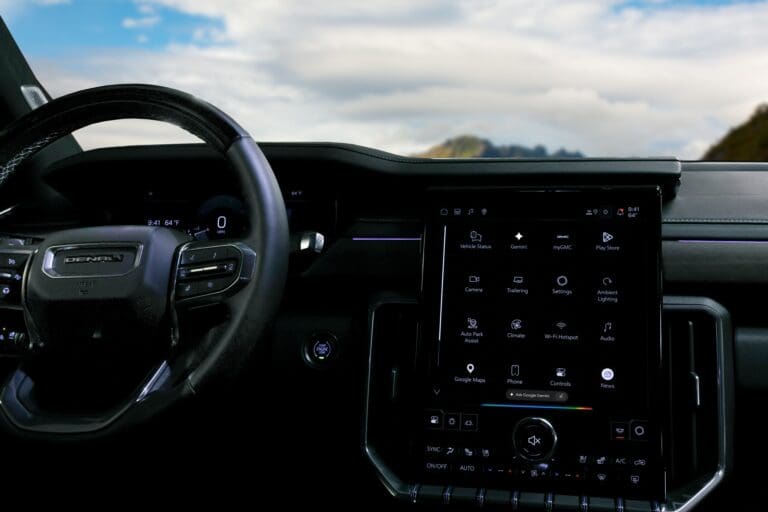
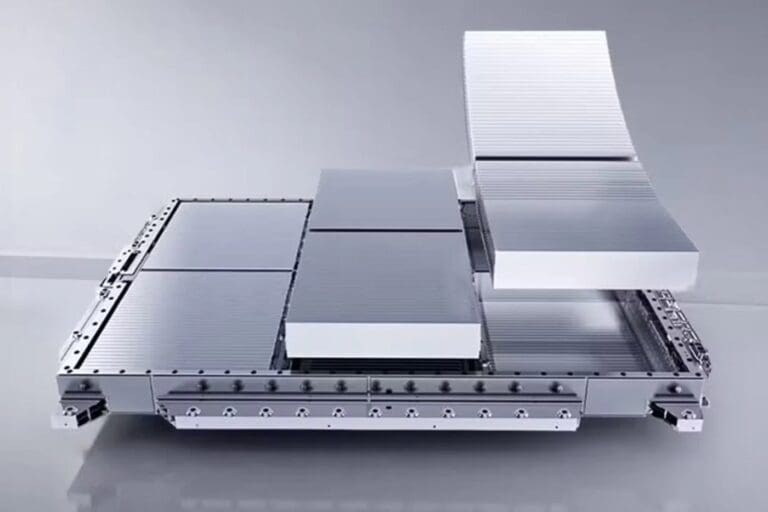
GM’s new centralized computing platform changes this fundamentally. By consolidating those dozens of ECUs into a unified computing core — connected through a high-speed Ethernet backbone — every vehicle system, from propulsion to safety to infotainment, can be coordinated and updated from a single point. The new platform is engineered to deliver up to 10 times more software updates and 1,000 times greater bandwidth than previous systems.
Think of it like the shift from a desktop computer with dozens of separate processors to a single, powerful chip that runs everything. The result is faster, smarter, and continuously improving.
The Impact on Customers
The implications for customers go far beyond convenience. When vehicles are always connected and always learning, the ownership experience transforms completely. Predictive diagnostics can identify issues weeks before a warning light appears. Battery management algorithms can adapt to individual driving patterns and environmental conditions. Safety systems can be updated in real time as new data emerges from millions of vehicles on the road.
This is the shift from reactive maintenance to proactive care — from a vehicle that breaks down to one that anticipates and prevents. In a region like the Middle East, where extreme temperatures and long distances place unique demands on vehicles, that kind of intelligent, adaptive performance is not a luxury. It is a genuine advantage.
OnStar, GM’s connected services platform, serves tens of millions of members worldwide and has been the backbone of this connected ecosystem since 1996. As vehicles evolve into software-defined platforms, OnStar evolves with them — becoming the trusted interface between the vehicle, the driver, and the world around them.
The Competitive Stakes
The industry understands what’s coming. Every major automaker is racing toward software-defined architecture. The question is not whether software will define the next era of mobility — it already is. The question is who will lead it.
Leading requires more than a software strategy. It requires scale, data, and the engineering discipline to deliver at both. GM’s advantage is that we are not starting from scratch. We are building on decades of manufacturing expertise, a global connected vehicle fleet generating real-world data, and a unified software platform that spans our entire portfolio.
The Road Ahead
The vehicles of the next decade will not just take you from point A to point B. They will learn your preferences, protect your safety, manage your energy, and improve with every mile driven. They will be extensions of your digital life — always connected, always getting better.
That future is not being built in the showroom. It is being built in code. And the automakers who understand that will define what mobility means for the next generation.