The S26 Ultra solves a problem many didn’t know existed
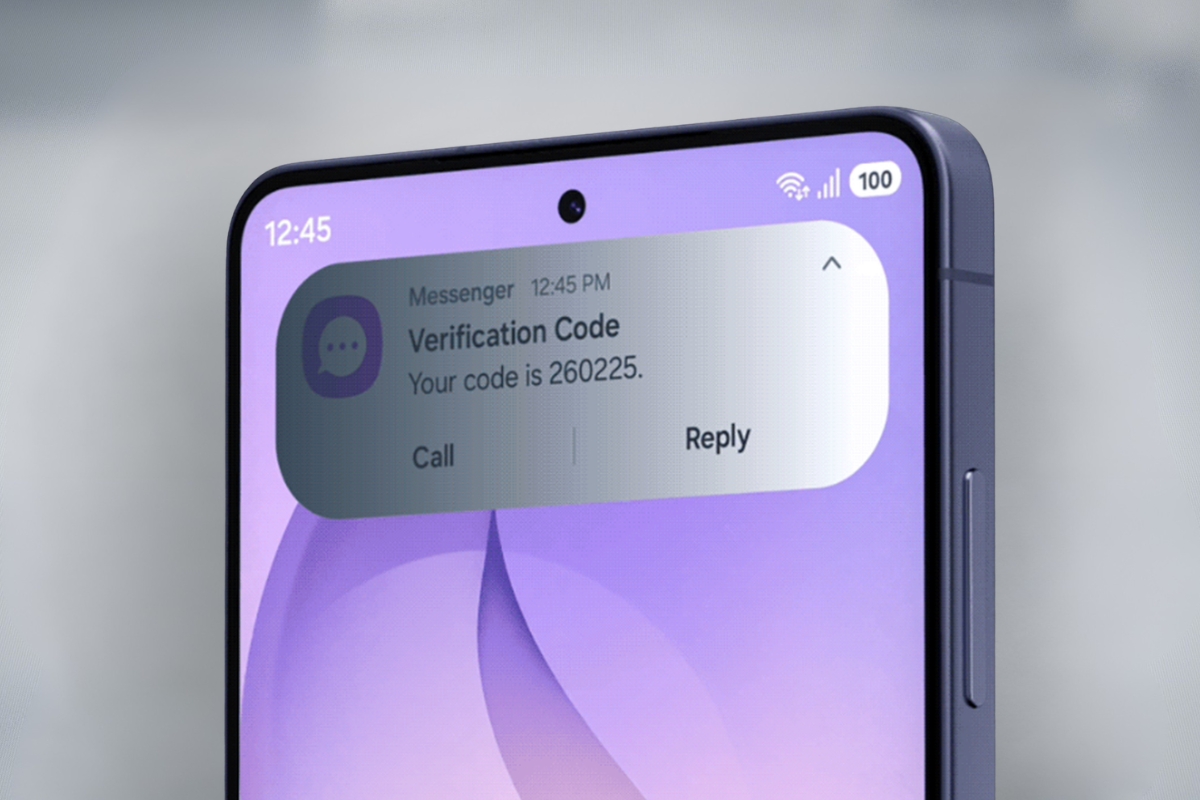
Walk into any café, airport lounge, or commuter train, and the same pattern appears everywhere: glowing screens in every direction. Smartphones have become inseparable from daily life, holding everything from private conversations to financial data and sensitive work information. Yet despite all the advances in security and software, one simple vulnerability has persisted: what’s on your screen is often visible to those around you.
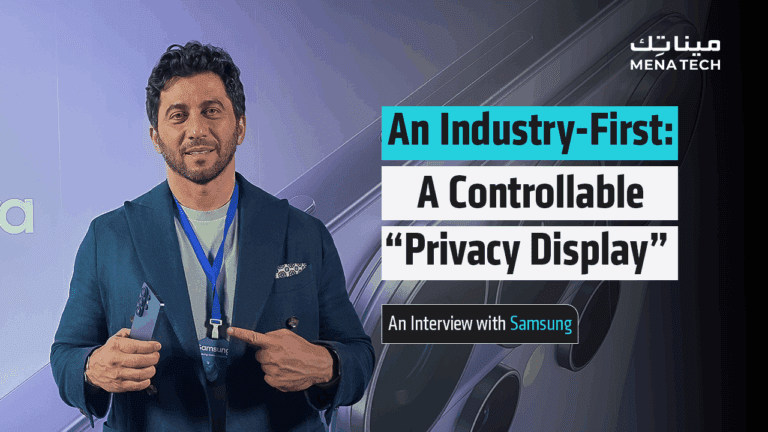
With the Galaxy S26 Ultra, Samsung directly tackles this problem through a new hardware-level feature that changes what a display can do. The new feature is called “Privacy Display”, and it ditches the old methods that rely on accessories and add-ons, and makes privacy an integral part of the screen through clever engineering.
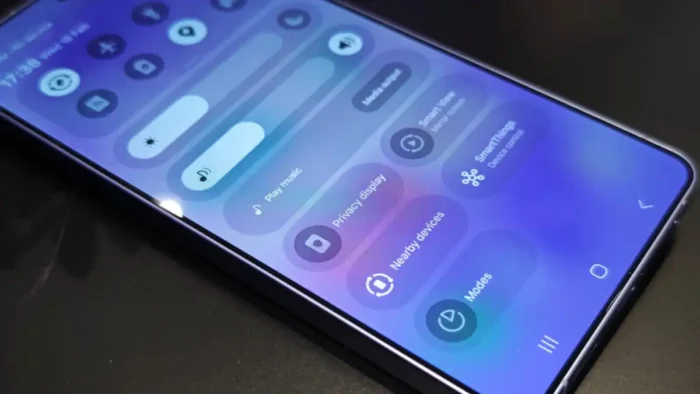
In addition to blocking view angles from all sides (not just left and right), what makes the implementation particularly compelling is how naturally it integrates into daily use. The feature can be turned on or off with a single touch, and users can further customize it to provide privacy exactly when needed. Already, the S26 Ultra offers options to have the Privacy Display turn on automatically for specific apps, like messengers and banking, and can even block only parts of the display, keeping everything visible while new notification pop-ups remain hidden.
The idea of privacy displays, as used in screen protector films, is relatively simple, but it never caught on for a reason: it has a lot of compromises. What is available in the Galaxy S26 Ultra is more advanced, drawing on years of research and development to offer a feature effective enough to protect the displays of business professionals and privacy-minded people, while being seamless enough for them to use.
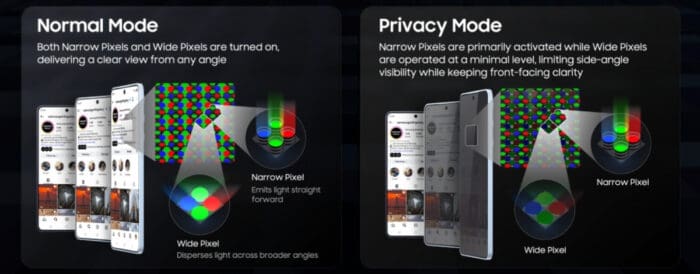
The S26 Ultra’s Privacy Display operates at the pixel level, using two different types of pixels designed to emit either “wide” or “narrow” light. In normal use, all pixels in the screen emit light, providing the wide viewing angles expected from a flagship OLED panel. But when Privacy Mode is activated, the display changes its behavior, dimming the “wide” pixels, while only the “narrow” pixels, designed to direct light forward, remain operational. The result is a screen that remains clear and vibrant from the front but becomes difficult to read from surrounding angles.
This approach transforms a long-standing issue into something the device handles natively. Shoulder surfing, where someone nearby can glance at your screen and steal sensitive information, has always been a real risk in everyday environments. The S26 Ultra doesn’t treat this as a niche concern, but as a core part of the user experience.
This level of precision changes how privacy feels in practice. The screen can be shared freely when needed, whether you’re watching a video or showing content to someone next to you, while still maintaining protection for moments that require discretion. The experience remains fluid, uninterrupted, and aligned with how people naturally use their phones.
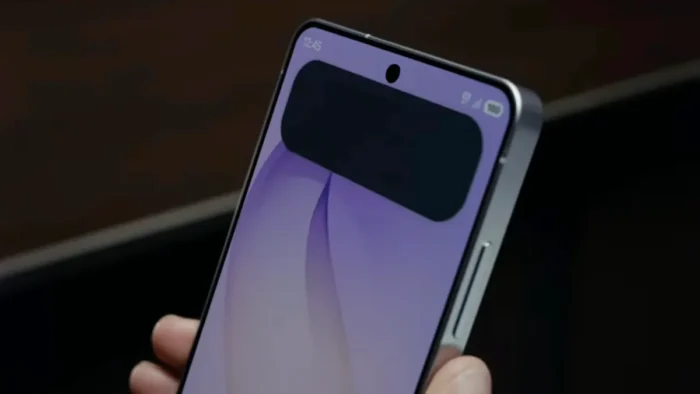
Equally important is that this added layer of privacy does not come at the expense of the display experience. The S26 Ultra continues to deliver the brightness, clarity, and visual quality expected from a flagship device, even with Privacy Mode enabled. Because the feature is built directly into the OLED panel rather than layered on top, the screen maintains its premium characteristics in everyday use.
Compared to earlier approaches, which relied on external filters or static solutions, the S26 Ultra represents a more integrated and intuitive direction. What this ultimately signals is a broader shift in how smartphone displays are evolving, and how privacy is becoming ever more important today.
Samsung clearly considered the usability and real-world impact of its new Privacy Display feature. This is especially important as most users tend to ignore features that are cumbersome to use or activate, even if they offer great value. Samsung understood that and, instead of a half-baked add-on, released a truly innovative solution that works with minimal setup and no restrictions.
Even for normal users who have never used privacy screen protectors before, the Privacy Display feature has proven popular. And with online privacy taking center stage in recent years, it’s also important to focus on offline privacy and add an extra level of protection to smartphone displays, which serve as windows into our digital lives.