Samsung wallet now allows you to unlock your door if you use a smart lock
Just days after introducing the Galaxy S26, Samsung is expanding the capabilities of its mobile wallet. Over the next few weeks, multiple smart lock brands are expected to formally announce compatibility with Samsung’s new digital house key system.
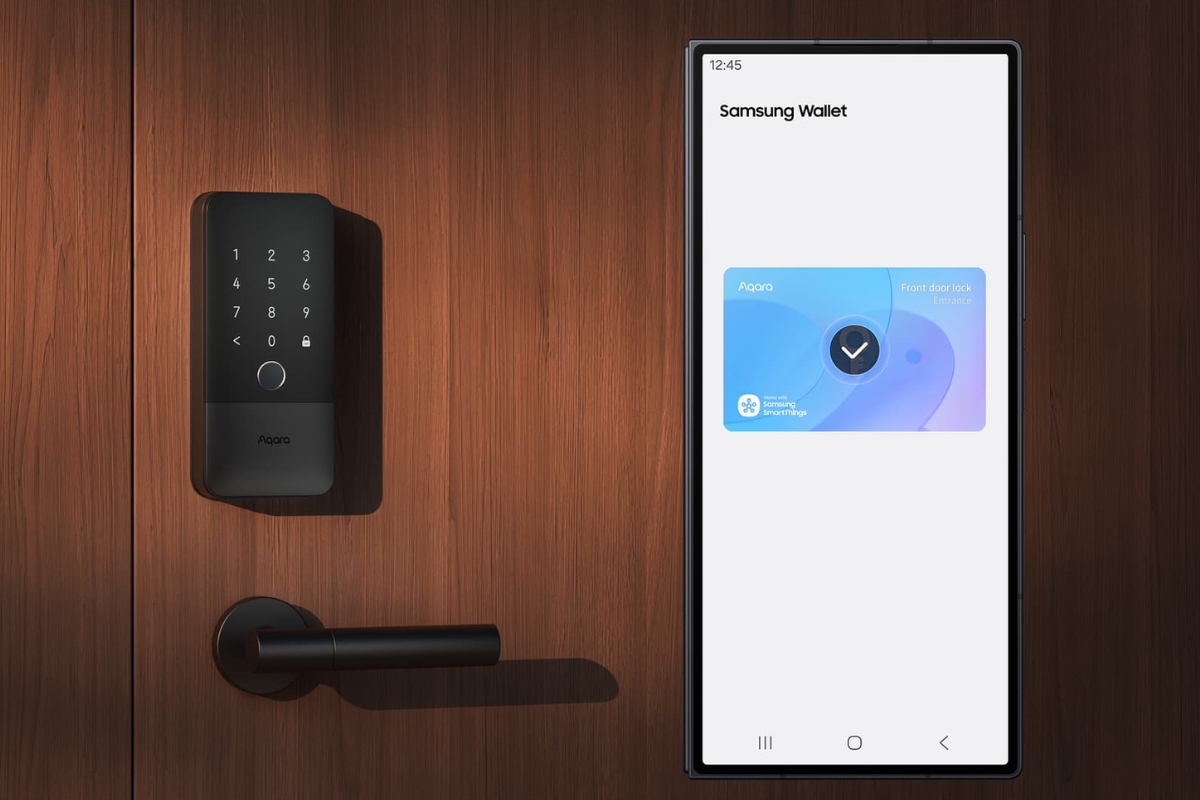
Beginning this month, select smart locks from Aqara, Nuki, Schlage, and Ultraloq will work with the recently unveiled Digital Home Key inside Samsung Wallet. Similar to Apple’s implementation, Galaxy users will be able to unlock their doors by launching the wallet app on a compatible smartphone or smartwatch and placing the device near the lock.
Digital key data is stored locally on the device and protected by Samsung Knox. Access requires biometric authentication or a PIN. If a phone or watch containing a home key is misplaced or stolen, users can manage or revoke access remotely through Samsung Find.
To enable the feature, users can add a digital key during the setup process for supported smart locks that integrate with Samsung SmartThings. While manufacturers have yet to publish detailed activation guides, customers are advised to monitor official support pages for instructions as the rollout progresses.
With Digital Home Key support, Samsung Wallet now closely mirrors Apple Wallet’s functionality. Both platforms allow users to store credit and debit cards, rewards memberships, vaccine records, boarding passes, car keys, identification cards, and more in one place.
The expansion of Digital Home Keys through Samsung SmartThings is built on the Matter protocol, the shared smart home standard that received a significant update late last year. Matter version 1.5 introduced a new category for cameras, enabling broader compatibility between smart home cameras and major ecosystems, including SmartThings, Apple Home, Google Home, Amazon Alexa, and others.
The wallet update follows closely on the heels of the launch of the Galaxy S26 series. One of the standout additions is the Galaxy S26 Ultra’s Privacy Display, designed to obscure on-screen content from side angles so that nearby observers cannot easily view it. The technology relies on a combination of two distinct pixel types to control how light is emitted from the display.