Why Gulf banks need to modernise one capability at a time

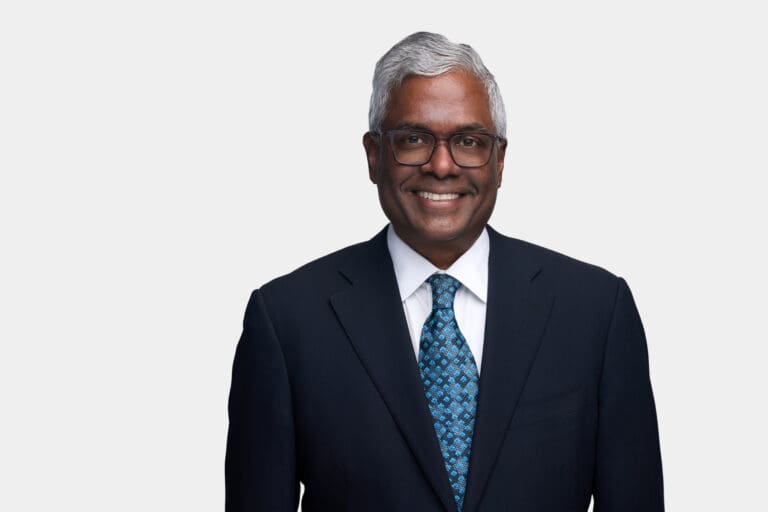
Guest article by Yannick Decaumont, CEO, CREALOGIX ME.
Last year, electronic payments made up 85% of all retail payments in Saudi Arabia, according to the Saudi Central Bank (SAMA). In the UAE, the national instant payments platform Aani has passed 12.5 million users. Open banking is now a licensed activity in the Kingdom, and open finance is live with banks in the Emirates.
These developments are more than evidence of payment adoption. They show how quickly financial services can scale when institutions operate on shared infrastructure, common standards and clearly defined capabilities. They are also creating new expectations for banks: to introduce services faster, connect them across channels and partner ecosystems, and adapt them as regulation and customer needs evolve.
The challenge is that many banks still operate in tightly connected technology environments where changing one product or customer journey requires coordinated changes across several systems. The next stage of Gulf banking will therefore depend not only on the infrastructure being built at national level, but on whether individual banks have the modular architecture needed to turn that infrastructure into new customer and business capabilities.
Regulators in both markets have established important foundations. The question now is how quickly banks can turn that progress into products customers want, and how safely they can change those products once they are live. Across the Gulf, the obstacle is rarely ambition. Far more often, it is architecture.
The speed challenge is increasingly architectural
In a tightly coupled environment, introducing or changing one capability can require coordinated changes and testing across multiple connected systems. What should be a targeted business change can therefore become a lengthy technology release.
Modular architecture changes the unit of change. It allows banks to introduce, adapt or retire individual capabilities through governed interfaces, while limiting the impact on the wider technology environment.
Modularity is not simply an IT upgrade. It gives the business greater flexibility to respond to new customer needs, market opportunities and ecosystem partnerships. The banks that lead will not necessarily be those spending the most on technology, but those able to introduce a new proposition or serve a new segment without waiting for a large, organisation-wide release cycle.
It also reframes modernisation itself. Full core replacement programmes are lengthy, expensive and carry significant execution risk. Modernising one capability at a time distributes investment and risk, enables banks to capture value earlier, and creates an opportunity to learn before extending the approach more widely.
Where modularity pays first: lending and SME finance
Lending is one of the clearest tests of modularity because the journey brings together product configuration, customer data, eligibility, decisioning, documentation, approvals and servicing. Credit products must also adapt continuously to new customer segments, data sources, risk policies and distribution partners.
Saudi Arabia illustrates the pressure this creates. Credit facilities to micro, small and medium-sized enterprises reached around SAR 467.7 billion at the end of 2025, up 33% year on year, according to SAMA data. Growth on this scale requires lenders to launch and adapt products for new customer segments, channels and risk profiles far more quickly than traditional change cycles allow. A small retailer, an online merchant and a growing manufacturer have very different financing needs, and serving each one means adjusting eligibility criteria, credit processes, distribution channels and customer journeys.
When these capabilities are tightly coupled, even a targeted change can become a complex release affecting multiple systems. A modular architecture allows banks to adapt individual capabilities through governed interfaces, introduce propositions for new segments and channels, and respond faster to market opportunities while maintaining control over risk, compliance and the wider technology environment.
Connected services: extending banking capabilities into partner ecosystems
Open finance turns modularity from an internal efficiency question into a distribution question. On 26 March 2026, SAMA moved open banking out of its regulatory sandbox and into a licensed activity. In the UAE, open finance under the Central Bank of the UAE’s AlTareq initiative is now live with banks, with Commercial Bank of Dubai activating it in January 2026.
The pool of potential partners is growing quickly. Saudi Arabia had 371 operating fintech companies by the end of August 2026, according to SAMA’s Governor. The same providers are also increasingly working across both markets. Lean Technologies, one of the first firms licensed by SAMA for open banking, is also live with banks in the UAE. Partners like these will expect clearly defined, consistent capabilities from Gulf banks, not a new bespoke integration for every institution.
A modular architecture allows a bank to expose a defined capability through governed APIs without opening the wider banking environment to every partner. This could include financing within a checkout journey, consent-based account information for a payroll platform, or payment services embedded within a marketplace.
The value is not simply wider distribution. It is the ability to participate in external customer journeys while maintaining clear control over identity, consent, data access, security, service levels and risk.
For customers, the difference is practical. A business owner can see a financing offer inside the invoicing platform they already use. A borrower gets a decision while still in the journey, not days later. And both keep clear control over what data they share, and with whom.
Governance by design, not as an afterthought
Speed is important, but not at the expense of trust. When banking services are delivered through external platforms, customers may deal with several providers in a single transaction, but they still expect their money and personal information to be protected, and to know who is responsible when something goes wrong. Regulators in both markets have put consent at the centre. SAMA frames open banking around privacy protection and customer consent, delivered only through supervised entities. In the UAE, the AlTareq standards make institutions liable for direct losses where activity takes place without valid consent, and banks and providers cannot hand their consumer protection duties to a partner.
Third-party risk management, end-to-end service visibility, rollback capabilities and recovery arrangements need to be designed into the architecture and operating model from the start. In a connected environment, disruption at a partner can quickly become a customer, operational and reputational issue for the bank.
Banks therefore need clear ownership of service continuity, consent, incident response and customer communication across the full journey. Connected services may extend beyond the bank’s own channels, but responsibility for managing the customer impact cannot become fragmented.
Where to start
The most effective programmes rarely start with the core. They start with the capability that changes most often and where value is easiest to measure, frequently loan origination or a single service offered to partners. Stable systems of record stay in place, interfaces and ownership are defined first, and progress is measured by one number: the time from business decision to live service.
Three questions for bank boards
Can we introduce a new capability without forcing change across the wider core environment? Which capability could we expose safely through a partner ecosystem within the next two quarters? If a connected journey fails, do we have clear ownership of consent, service continuity, incident response and customer communication?
Saudi Arabia and the UAE have built advanced national payment and data infrastructure in a remarkably short time. The banks that make the most of it this decade will not be the ones that rebuilt everything at once. They will be the ones that learned to change one thing well, and then the next.