Threats lurk in public charging ports, UAE Cyber Security Council warns
A recent warning from the UAE Cyber Security Council highlighted a threat that nearly 79% of travelers face: using unsafe charging ports, thereby putting their data at risk.
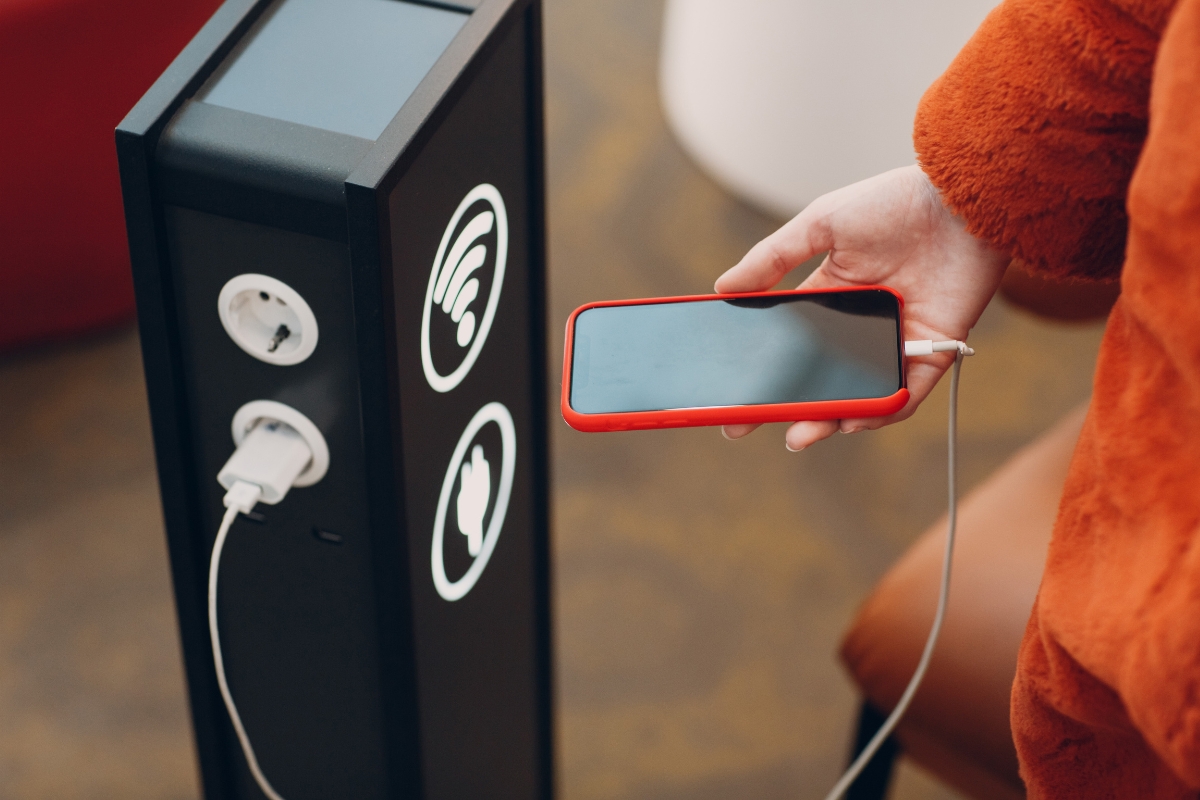
The warning urged travelers to avoid public charging stations due to a rise in persistent threats usually referred to as “juice jacking”. This attack involves tampering with charging points in public spaces, such as airport lounges, restaurants, and malls, and compromising them to infect connected devices with malware or siphon private data from them.
The Council noted that some public chargers may contain malicious software that can access data or install harmful programs on connected devices via automatically triggered media transfer protocols.
The threat relies on USB ports, now commonly embedded in power outlets in public places. These ports eliminate the need to carry a charging brick, as only a USB cable is required. Yet, experts warn that such ports can be tampered with or replaced with malicious ones to steal users’ data or infect their devices. The best practice is to charge devices only with the user’s own chargers.
According to the warning, 68% of companies have experienced incidents linked to unsafe charging points, resulting in data leaks and disruptions to corporate digital systems. This reinforces that most hacking activity targets businesses, but experts warn that individuals are not immune to such attacks.
Signs that a device may have been compromised include unusually fast battery drain, slower app performance, frequent crashes, and unfamiliar notifications or symbols appearing on the screen. Yet many advanced malware strains exhibit limited or no visible symptoms and can operate for years without being detected.
To minimize these risks, the Council advised travelers to decline any data-transfer requests when connecting devices to unknown power sources, use their own chargers, and avoid public charging stations altogether when possible. General security recommendations also apply: enable two-factor authentication, use biometric authentication, and review app permissions to limit access to sensitive information, such as messages, contacts, and photos.