The fragility of undersea cables is more apparent than ever
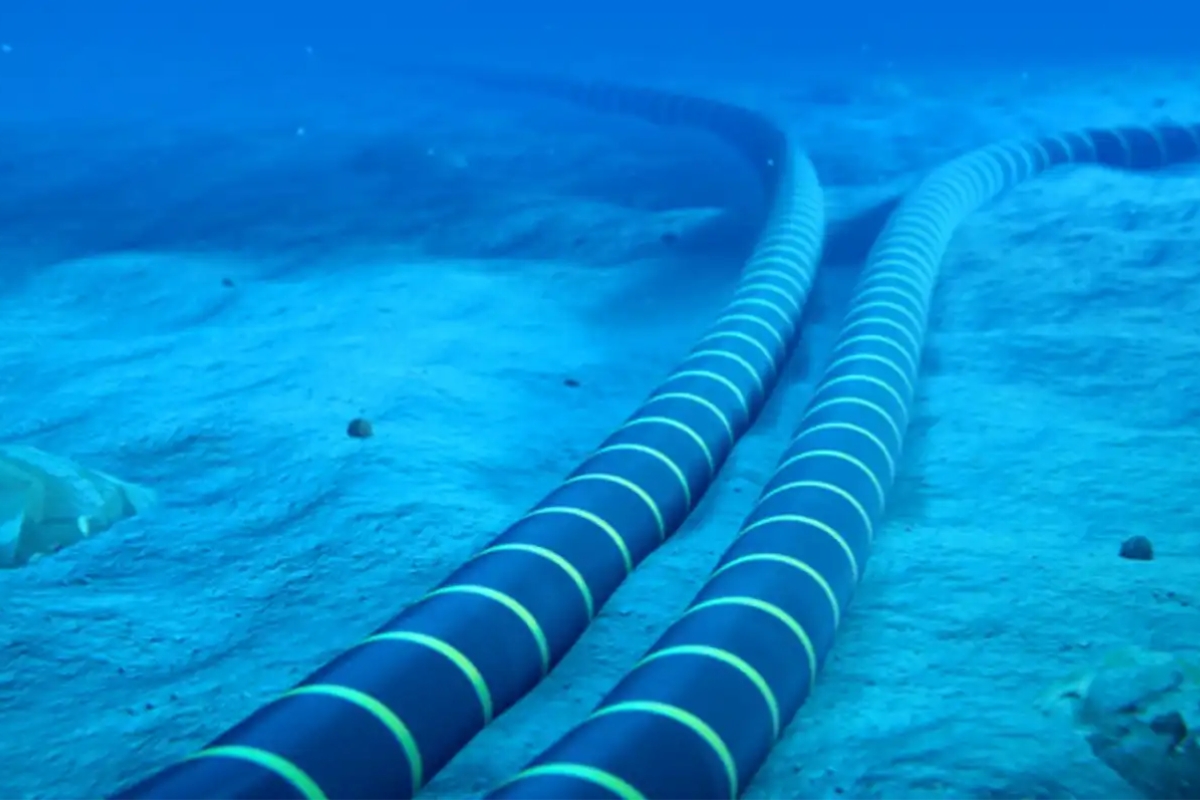
The modern global economy depends on an invisible, yet critical layer of infrastructure: undersea fiber-optic cables. Stretching across oceans and seabeds, these cables carry nearly all international internet traffic, enabling everything from financial transactions and cloud computing to government communications and everyday digital services. Despite their importance, undersea cables remain among the most vulnerable components of the global network.
More than 95% of intercontinental data flows travel through undersea cables rather than satellites. These cables often converge at a limited number of “routes” along coastlines, creating concentrated points of failure. Damage to even a small number of key routes can disrupt entire regions, slow global internet speeds, and impair access to critical services.
Unlike terrestrial infrastructure, undersea cables are challenging to monitor continuously. Large stretches lie thousands of meters below sea level, beyond the reach of routine surveillance. Repairs are costly and time-consuming, and they require specialized vessels, making cables attractive targets for disruption in both peacetime and crisis scenarios.
Dual-use technologies and cable disruption
One of the most persistent risks to undersea networks stems from the dual-use nature of maritime and submersible technologies. Equipment designed for legitimate purposes, such as cable maintenance, seabed research, or emergency repairs, can also be adapted to damage or sever cables. This is especially alarming, as it becomes increasingly complex to distinguish between maintenance tools and offensive assets.
Research institutions and commercial entities worldwide have developed tools capable of operating at extreme depths, including remotely operated vehicles (ROVs), autonomous underwater vehicles (AUVs), and mechanical or electrically powered cutting devices. These systems can interact directly with armored fiber-optic cables, which are otherwise designed to withstand environmental stress and accidental damage.
Patents and technical publications reviewed by security analysts indicate that relatively simple mechanisms, such as grapnels, anchor-like devices, and powered blades, can be deployed from ships or submersibles to quickly and discreetly compromise cables. As these technologies become more affordable and precise, the barrier to entry for cable interference continues to decline.
Gray-zone activity and attribution challenges
Undersea cable incidents often occur in a gray zone between accident and intent. Cables are frequently damaged by fishing trawlers, ship anchors, or natural events such as earthquakes. This ambiguity complicates attribution and allows malicious actions to be plausibly denied.
In recent years, investigations into cable disruptions near strategic maritime corridors have highlighted irregular vessel movements, prolonged anchor dragging, and unexplained damage patterns. Such incidents underscore the difficulty of distinguishing between negligence and deliberate interference, particularly when activities occur in international waters.
This ambiguity makes undersea cables an attractive tool for strategic pressure. Disruptions can degrade communications, create economic uncertainty, and signal capability without triggering a direct military response.
Strategic implications for national security
Military planners and security analysts increasingly view undersea cables as both strategic assets and liabilities. In conflict scenarios, severing or degrading cable connectivity could simultaneously disrupt command-and-control systems, financial markets, and civilian communications.
Particular attention has been paid to regions where multiple cables converge near geopolitical flashpoints. Mapping cable routes and landing stations provides insight into which nodes are most critical and therefore most vulnerable. While redundancy exists in the global cable network, not all routes are equally replaceable, and rerouting traffic can introduce latency, congestion, and reduced resilience.
Governments and regulators are beginning to respond to these risks by strengthening oversight of cable infrastructure. Measures under discussion or in implementation across jurisdictions include stricter security reviews for new cable projects, restrictions on participation by high-risk vendors, and enhanced monitoring requirements for vessels operating near cable routes.
Some authorities are also exploring diversification strategies, such as increasing cable redundancy, expanding terrestrial fiber routes, and investing in complementary satellite connectivity to reduce reliance on any single transmission medium.
At the industry level, operators are deploying improved sensing technologies, including real-time cable monitoring and seabed surveillance systems, to detect disturbances earlier and accelerate response times.
An enduring infrastructure challenge
Undersea cables are foundational to the digital world, yet their physical vulnerability contrasts sharply with the perception of the internet as a resilient, borderless network. As global dependence on data continues to grow, so too does the strategic importance of protecting the infrastructure beneath the oceans.
Ensuring the security of undersea cables will require sustained international cooperation, more explicit norms around maritime behavior, and greater transparency in the deployment of dual-use technologies. Without such efforts, one of the most critical pillars of global connectivity will remain exposed, out of sight, but increasingly at risk.