The display technology shift that is quietly redrawing the premium TV market in Saudi Arabia

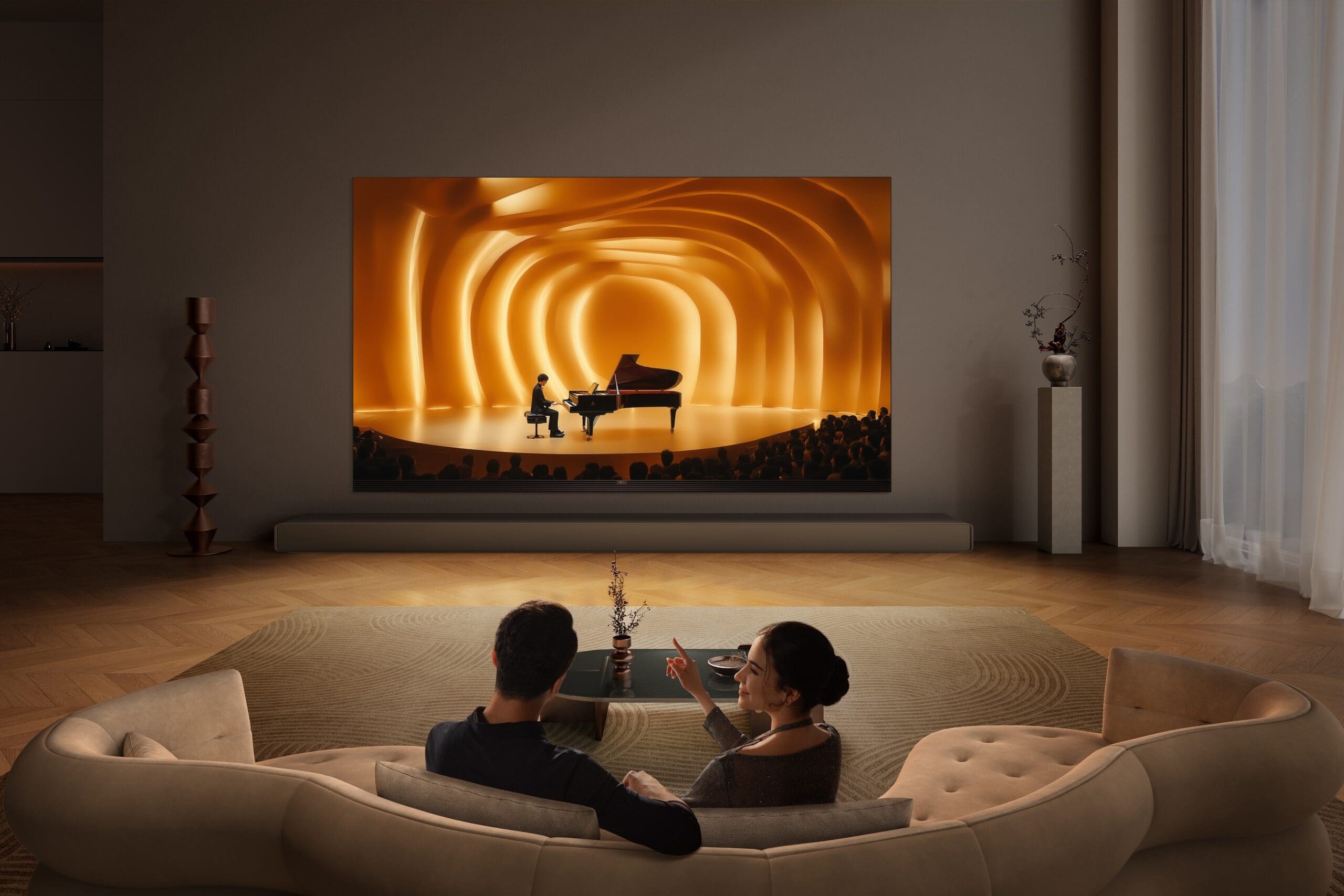
Technology markets often change gradually before suddenly appearing inevitable. The transition from plasma to LCD, the move from HD to 4K, and the rise of streaming all followed a similar pattern. New technologies reached a point where they became practical, scalable and commercially viable enough to replace what came before. The premium television market is now approaching another such moment.
The arrival of SQD-Mini LED TV, or Super Quantum Dot Mini LED, represents an important step in the evolution of premium displays. To understand why, it is necessary to look beyond the product itself and examine the technological and market forces that made it possible.
How the premium display market reached this point
For much of the past decade, the premium television market has been defined by two competing display architectures. OLED delivered exceptional contrast and true per-pixel light control, producing deep blacks and highly accurate image reproduction. However, it faced limitations in peak brightness, panel longevity and the economics of producing ultra-large screens.
Mini LED addressed many of these challenges by using thousands of tiny LEDs to create significantly higher brightness and improved HDR performance, particularly on larger displays. Yet it also introduced its own challenges around contrast precision and blooming. For years, consumers effectively chose between the strengths of one technology and the limitations of the other. The industry improved both architectures incrementally, but the trade-off remained. SQD-Mini LED TV changes that equation.
The technology combines advanced Mini LED backlighting with TCL’s Super Quantum Dot material, designed to maintain colour accuracy at brightness levels that previous quantum dot formulations struggled to sustain. Rather than simply increasing brightness or adding more dimming zones, SQD-Mini LED TV improves how light and colour interact across the entire display system.
The result is a display architecture that delivers the brightness and scale advantages of Mini LED while maintaining stronger colour stability under demanding viewing conditions.
The manufacturing economics that make this possible
Display innovation is not only about engineering. It is also about manufacturing capability. TCL CSOT, the display manufacturing division behind TCL’s SQD-Mini LED TV technology, is the world’s largest producer of 85-inch and above television panels and the leading manufacturer of 98-inch and above panels. With 12 production lines and more than RMB 300 billion invested in research, development and manufacturing infrastructure, TCL operates at a scale that allows it to develop both display materials and panels internally.
That vertical integration is particularly important for SQD-Mini LED TV. Quantum dot materials are highly dependent on the optical and thermal characteristics of the display they are integrated into. By developing the Super Quantum Dot material and panel architecture together, TCL can optimise both simultaneously, helping deliver stronger colour performance at extremely high brightness levels. This manufacturing capability is not simply a company credential. It is one of the reasons SQD-Mini LED TV can be produced at a commercial scale and brought to market across multiple screen sizes.
The competitive landscape
The introduction of a new display architecture by a vertically integrated manufacturer often influences the direction of the wider industry. When TCL introduced Mini LED technology in 2019, it took several years before the architecture became widely adopted across the premium television category. Today, Mini LED is a major pillar of the high-end TV market.
SQD-Mini LED TV follows a similar pattern. The Super Quantum Dot material and the display architecture built around it are currently available through TCL’s manufacturing ecosystem. While the market is experiencing intense competition to develop alternative display solutions, the technological maturity achieved by this architecture provides it with a significant advantage.
This allows SQD-Mini LED TV to help define the next phase of premium display development, particularly in markets where demand for large-format, high-performance televisions is growing rapidly. Saudi Arabia is one such market.
The continued growth of home entertainment, gaming, streaming and premium residential living aligns closely with the strengths of SQD-Mini LED TV. As consumers increasingly invest in larger screens and more immersive viewing experiences, technologies that combine brightness, colour accuracy and large-screen scalability are likely to play an increasingly important role.
The big picture
The story of SQD-Mini LED TV reflects a broader truth about technology markets. Many of the most important advances in consumer electronics begin not with consumer demand, but with breakthroughs in engineering and manufacturing. New technologies create new experiences, and consumer expectations evolve accordingly. SQD-Mini LED TV is the latest example of that process.
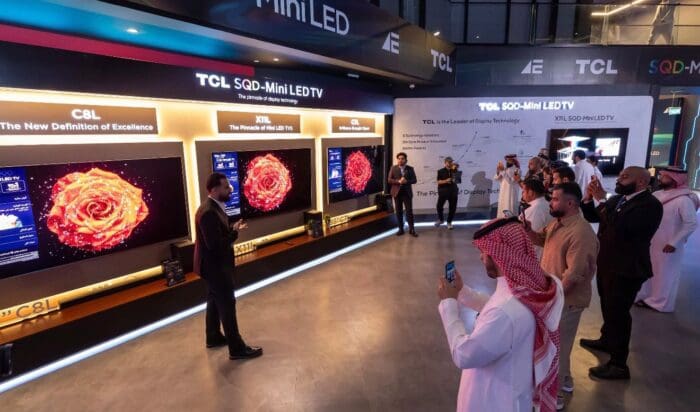
By combining advances in quantum dot materials, Mini LED backlighting and large-scale manufacturing, it addresses several of the challenges that have shaped the premium display market for years.
For Saudi Arabia, where demand for premium large-screen entertainment continues to grow, the technology arrives at a particularly relevant moment. The premium television market is evolving once again. SQD-Mini LED TV is one of the clearest indicators of where it is heading next.