Seagate unveils 44TB hard drive for AI-scale data centers
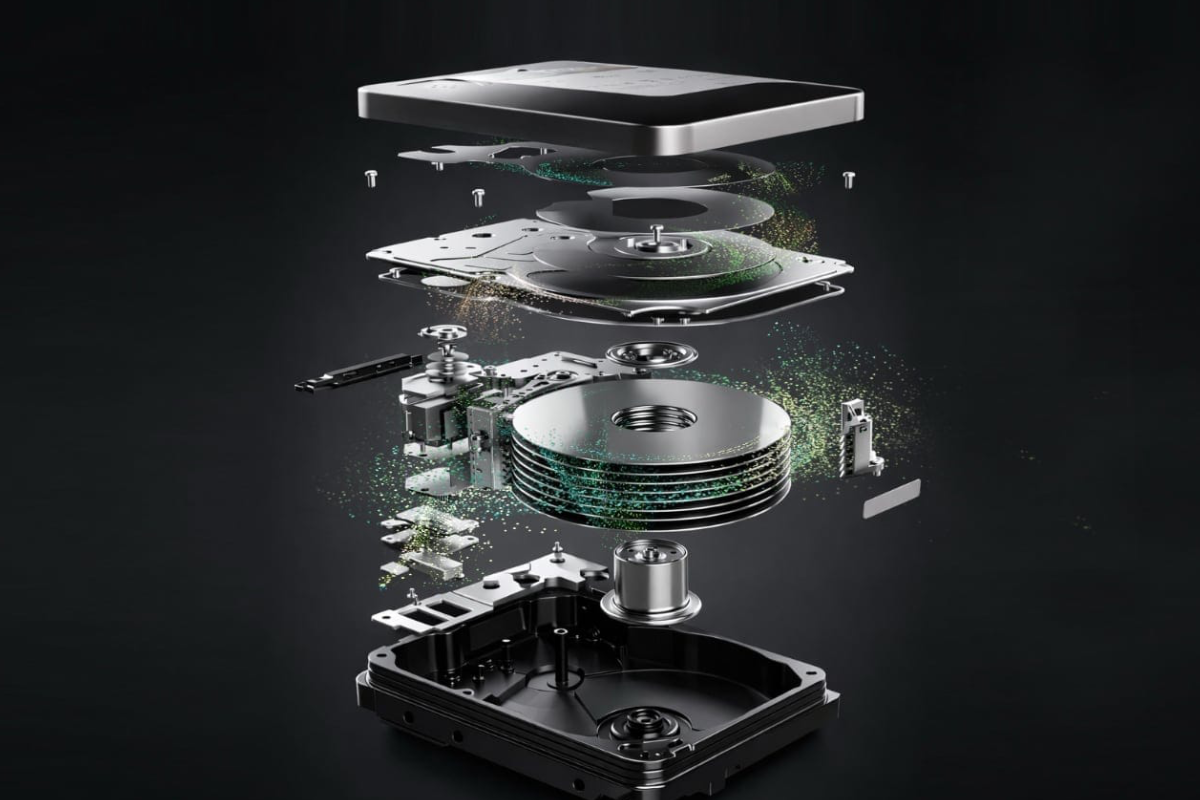
Seagate is continuing to expand its next-generation magnetic storage technology following the launch of the first commercially available HAMR drives. The company has now introduced its latest platform, called Mozaic 4+, designed to deliver significantly larger capacities while targeting enterprise customers running large-scale AI workloads.
The company first launched the Mozaic 3+ platform in 2024, marking the debut of heat-assisted magnetic recording (HAMR) as a real-world product for organizations requiring extremely large storage volumes. Seagate’s new Mozaic 4+ drives build on that foundation, increasing maximum capacity to as much as 44TB per drive.
Seagate said it is currently working with two unnamed hyperscale cloud providers to deploy the new drives. According to the company, the Mozaic 4+ models have already completed qualification and are now in production, with shipments underway to initial customers. Wider availability for other hyperscale operators, as well as additional enterprise buyers, is expected in the near future.
The Mozaic 4+ platform represents an incremental upgrade to Mozaic 3+, incorporating improvements in reliability, efficiency, and storage density. Seagate said that when deployed at a scale of one exabyte, the new drives can increase infrastructure efficiency by approximately 47% compared with a typical configuration based on 30TB drives.
The company also estimates that adopting Mozaic 4+ could reduce the physical footprint of a data center installation by about 100 square feet and lower annual energy consumption by roughly 0.8 million kilowatt-hours.
Such gains in efficiency can have a substantial impact in environments operating at AI scale, where data centers must handle massive storage requirements while controlling operational costs. Seagate designed the Mozaic 4+ platform specifically for hyperscale operators and AI-focused infrastructure, areas that have become a major priority across the technology industry.
HAMR technology relies on a laser diode integrated into the drive’s read/write heads. The laser briefly heats a tiny area on the magnetic platter, allowing data to be written at far higher density. This extremely localized heating process lasts less than a nanosecond and enables more digital information to be stored in the same physical space.