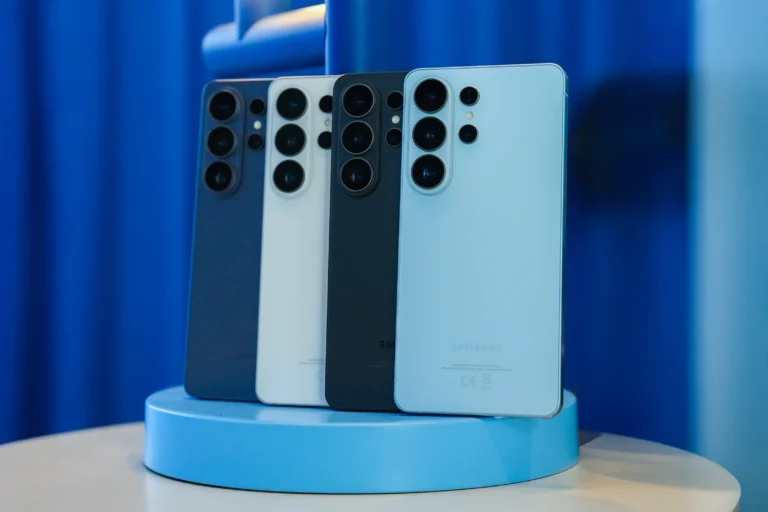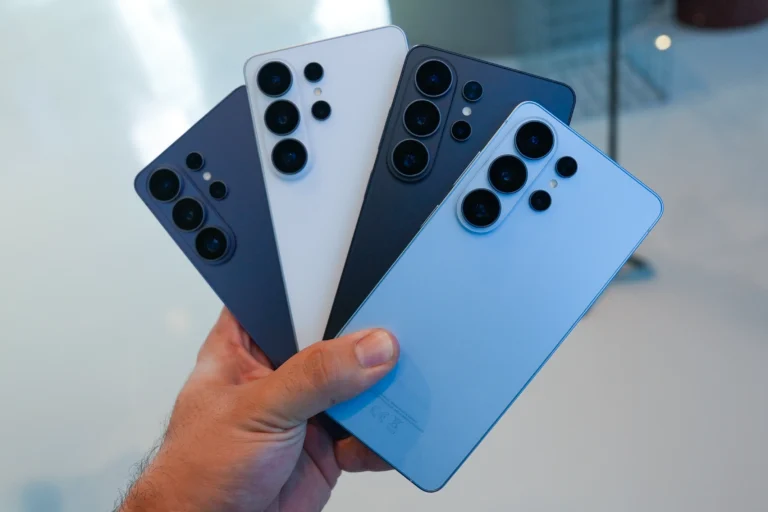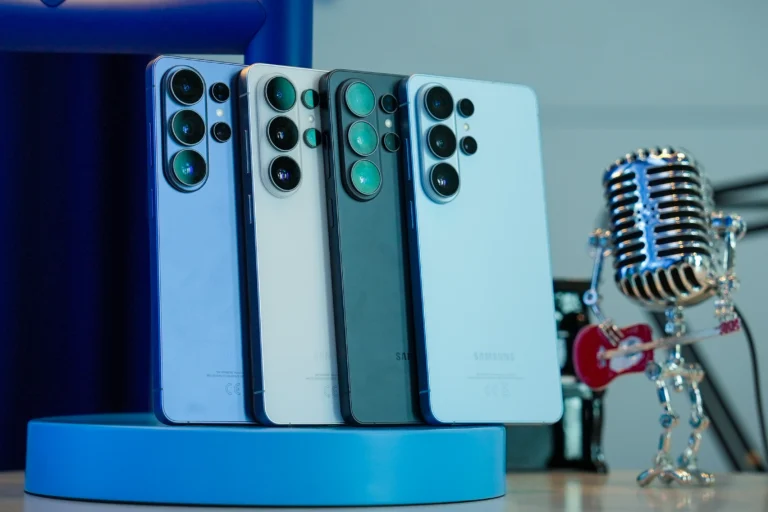
Samsung launches its Galaxy S26 lineup, with AI features and privacy taking center stage
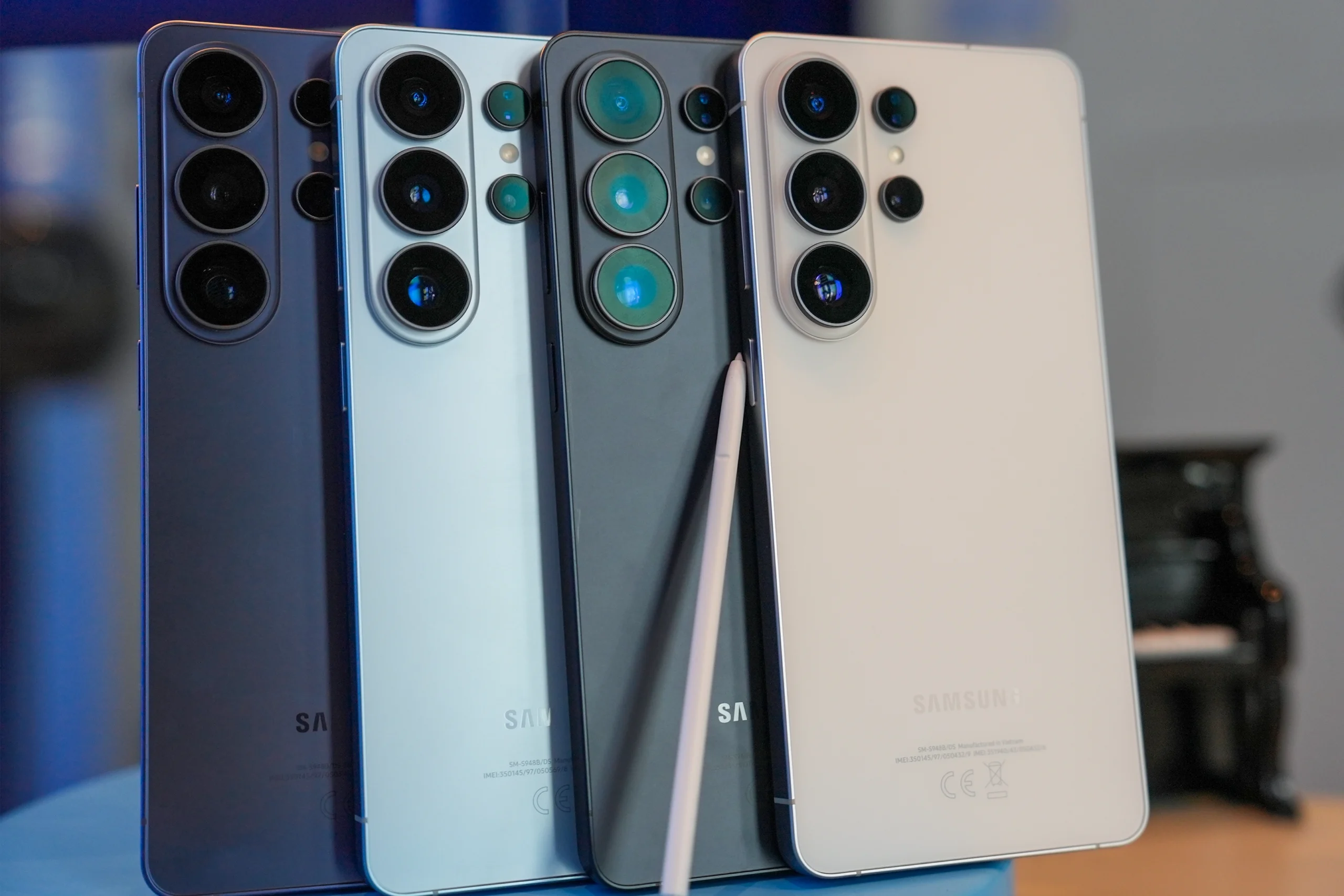
For over a decade and a half, Samsung’s Galaxy S series has led in technology, introducing new features and setting industry standards. The series debuted on-device AI with the S24, enhanced it with the S25 as an AI companion, and now integrates AI into the core of the S26, working seamlessly in the background.
Instead of just adding features to hardware, Samsung is designing the S26 lineup around three main pillars: performance, imaging, and Galaxy AI. The goal is to create a flagship series that feels faster, clearer, and more intuitive during everyday use, without confusing users with too much complexity.
Sleeker, cooler design for power users
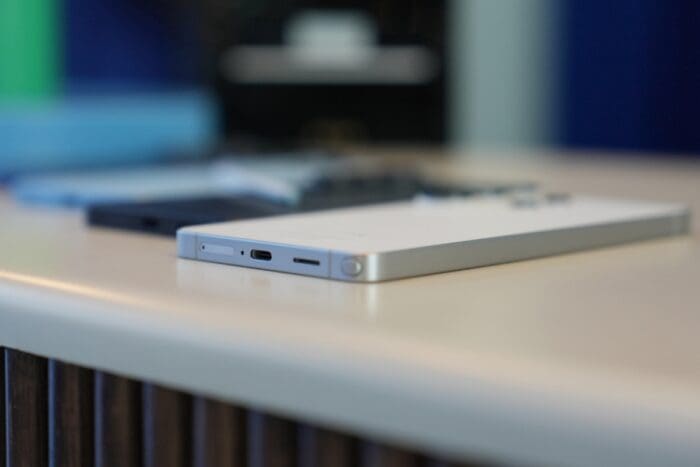
At first glance, it’s clear that the S26 Ultra refines Samsung’s familiar innovative design language. The most noticeable change is its slimmer profile: at 7.9mm, it is the thinnest Ultra model yet, down from 8.2mm on its predecessor. This thinness comes from careful internal re-engineering, not cosmetic trimming, so it doesn’t tax battery capacity or display size.
Additionally, Samsung has shifted from titanium to “Armor Aluminum” for the phone’s frame. The reason is practical: aluminum offers better resistance to edge deformation from drops and dissipates heat more effectively. The result is a device that remains comfortable to hold during long gaming sessions or heavy multitasking.
Performance is top-notch across the lineup, with the S26 Ultra featuring the Snapdragon 8 Elite Gen 5 for Galaxy, a custom-tuned version with higher clock speeds and improved overall performance. The base S26 and S26+ models use the Exynos 2600 chipset, which is the first built on a 2nm platform. Overall, the lineup ensures smoother multitasking, responsive AI features, and sustained performance, all supported by a redesigned vapor chamber that is 21% more efficient than before.
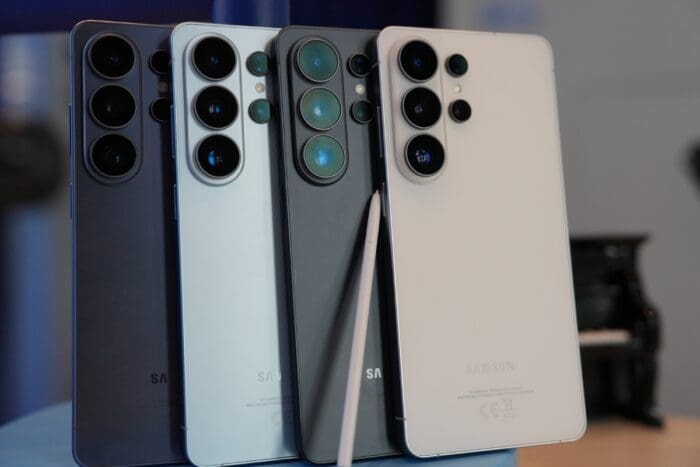
Better visuals all around
The S26 Ultra features a 10-bit display, a first for Samsung smartphones. On the spec sheet, the panel can display up to 1 billion colors, compared to the 16.7 million typical of 8-bit screens. In real-world use, the difference is noticeable: color banding is reduced, and subtle gradients like sunsets, skies, and shadows have a more natural transition. This also enhances HDR performance, resulting in richer color gamuts.
Beyond color depth, Samsung combines the display with a Mobile Digital Natural Image Engine (mDNIe) and ProScaler technology. ProScaler is an innovative feature that can enhance lower-resolution images in real time, whether from social media feeds or shared photos. This results in clearer text edges and sharper visuals, especially noticeable on large, high-resolution panels.
Better imaging in any light
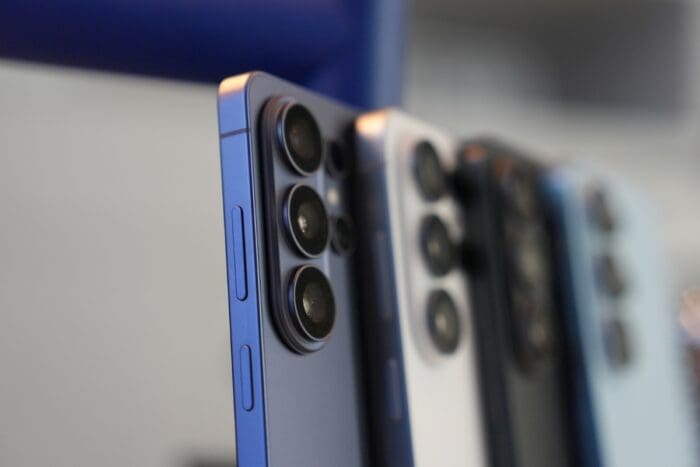
As with all flagship phones, camera improvements remain central to the S26 lineup. On the S26 Ultra. The main 200MP sensor now features a wider f/1.4 aperture (compared to f/1.7 in the last generation). The practical outcome is increased light intake, up to 47% more on the main lens, supporting brighter low-light photos and cleaner video.
Nightography enhancements blend hardware and AI ISP (Image Signal Processing) to lessen grain and sharpen details in low-light conditions. A key addition is “Horizontal Lock” in Super Steady mode, which stabilizes footage even if the device rotates significantly during recording. For users capturing action, travel, or social videos, this provides smoother results without the need for external gear.
Professional creators would also value the S26 Ultra’s APV (Advanced Professional Video) encoding, a Samsung-developed codec that supports 8K recording at 30 fps with more flexible post-production workflows.
Selfies have also experienced a tonal shift. Samsung has decreased oversaturation with better image signal processing and object-aware adjustments, aiming for a more natural look instead of exaggerated vibrancy.
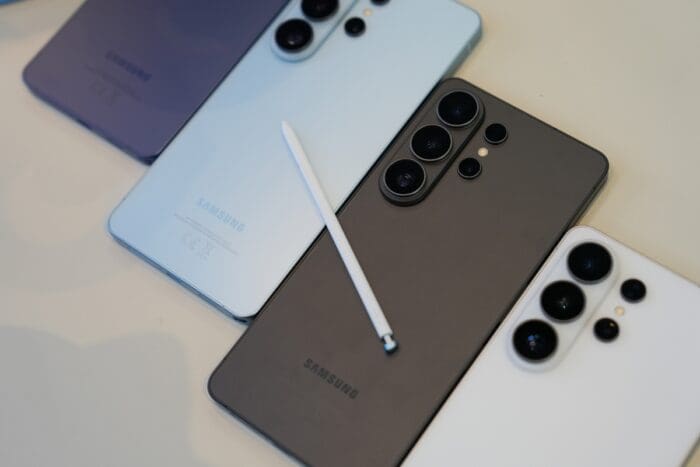
AI everywhere, yet unobtrusive
The main focus of the S26 lineup is AI accessibility. In the new series, Galaxy AI is not presented as a separate toolset but as an integrated layer that predicts user intent.
Features like Photo Assist enable users to edit images with natural prompts and easily add new elements to existing scenes. Other features, such as “Now Nudge,” extend this intelligence into messaging and scheduling by surfacing contextual shortcuts—such as sharing relevant photos or adding calendar events—directly within conversations. Meanwhile, Call Screening (currently limited to English, with Arabic support in development) allows AI to handle unknown callers before connecting the line, providing a practical response to everyday spam fatigue.
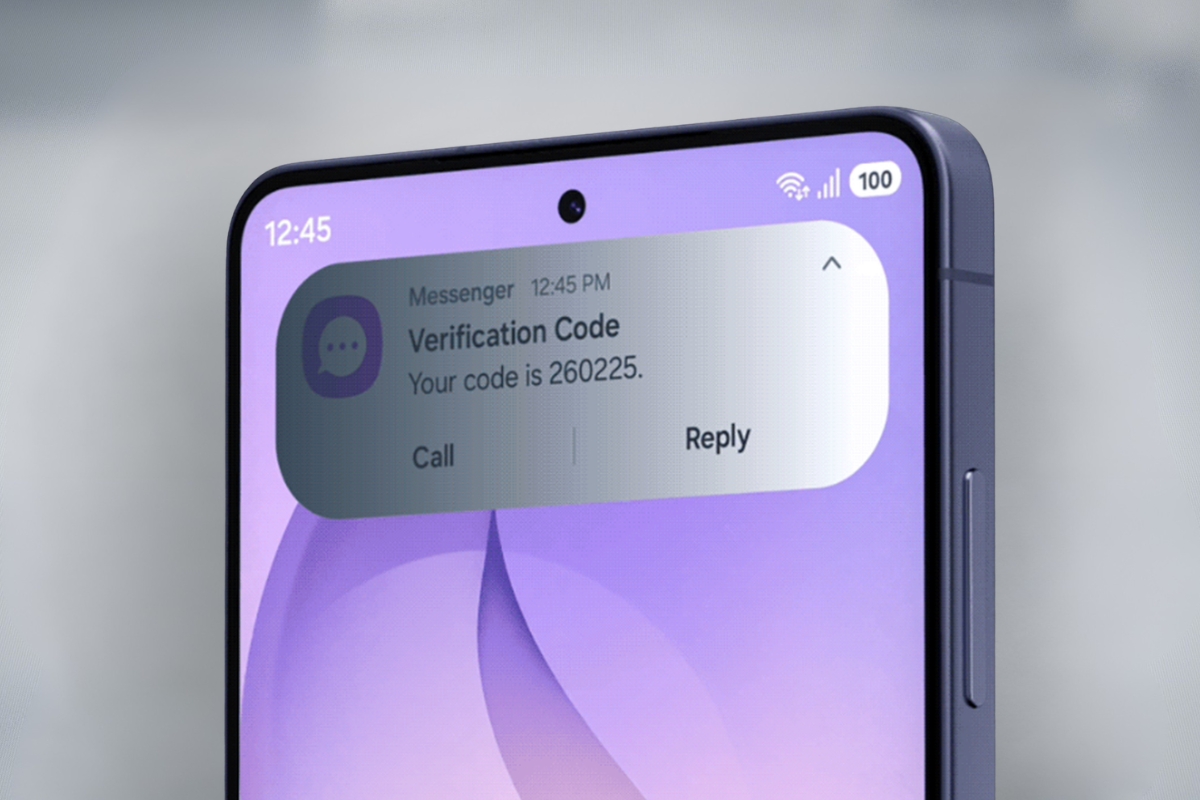
One of the most hyped features of the S26 Ultra is its innovative “Privacy Display.” This feature eliminates the need for traditional “privacy screen protectors” that prevent sideways viewing of the display and offers an unprecedented level of privacy. Privacy Display allows users to select specific apps to block the screen, which is especially useful for chat or banking apps. For added privacy, the phone can also be configured to block certain parts of the display, such as incoming notifications or password fields on login pages.
A unified flagship strategy
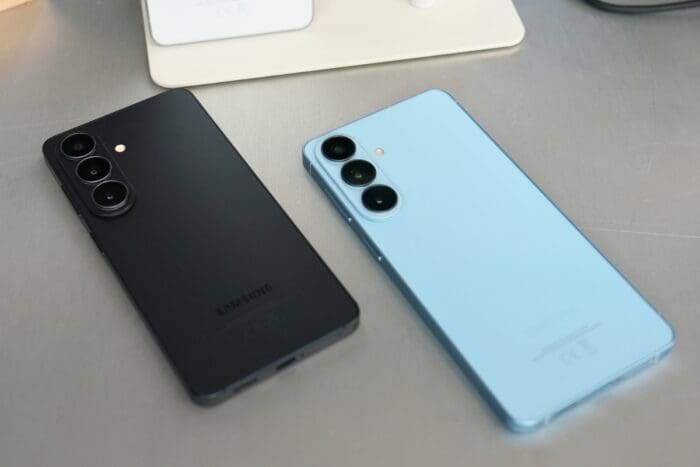
The S26 lineup doesn’t try to be revolutionary in just one area. Instead, it offers a steady evolution: a flagship model built to anticipate, adapt, and stay out of the way, while providing the power expected at the top of the Galaxy line.