Google’s “Aluminium OS” is coming to replace Chrome OS – What do we know?
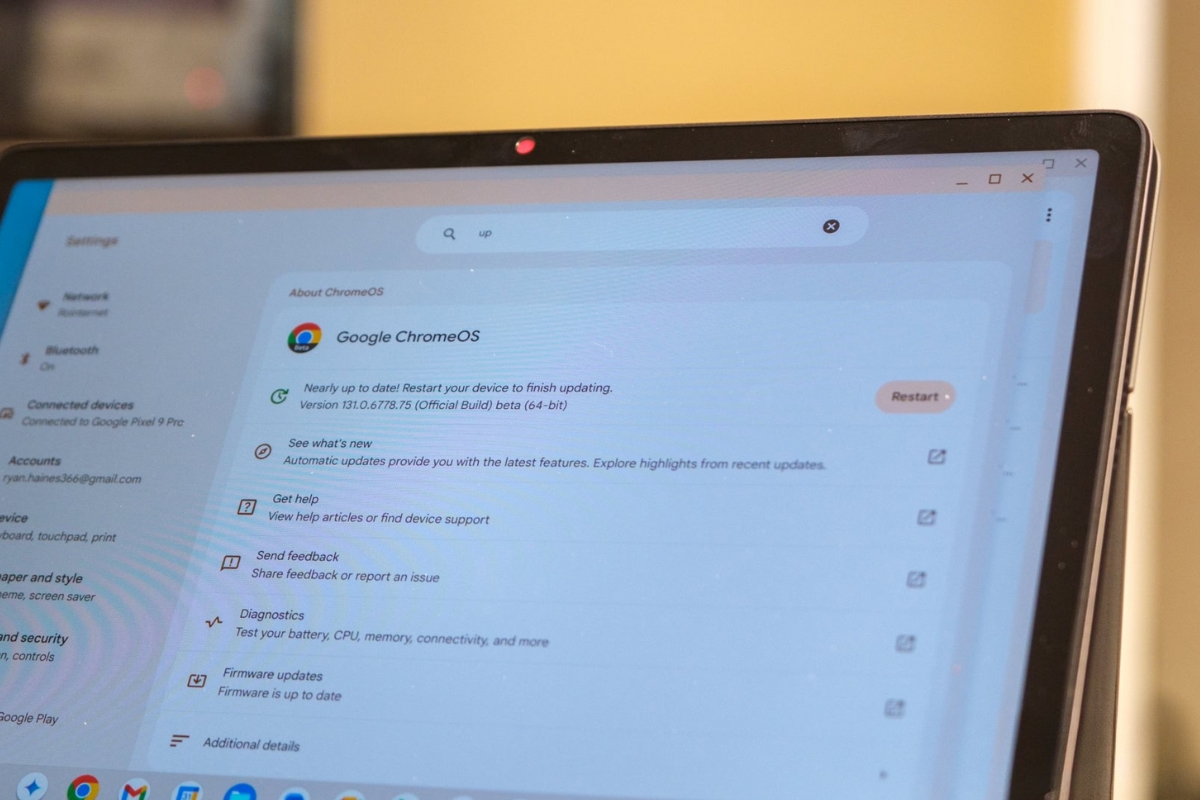
For many years, Google has dominated the smartphone OS market, with Android still accounting for 72% of the global market share. Yet, this dominance didn’t translate well to other platforms. Tablets are still dominated by the ever-popular iPad, which accounts for more than half. In the PC space, it’s even bleaker in the PC market, where Google’s own Chrome OS reportedly represents only 1.3% of the market.
Given that it launched in 2011, Chrome OS didn’t fulfill its destiny as the go-to choice for affordable laptops. Now Google is at it again with a lighter OS named “Aluminium OS” according to reports. The name apparently reflects the fact that aluminum metal is almost half as heavy as chrome.
The trump card for the upcoming system is that it is an Android-based operating system designed for traditional PCs. This is a departure from Chrome OS, which was developed in parallel to Android. “Aluminium” is now expected to replace Chrome OS as Google’s laptop offering, hoping to take a larger share of the pie.
The new system was referenced in a recently deleted job listing for a senior product manager focused on Android laptops and tablets. According to the listing, the selected candidate would help develop Aluminium, described as an Android-based operating system “built with artificial intelligence at its core,” which implies deep integration with Gemini. The posting also stated that the manager would oversee the transition from ChromeOS to Aluminium.
Until hardware powered by Aluminium is ready for commercial release, the role would also be responsible for shaping a lineup of ChromeOS devices across several categories, including traditional Chromebooks, convertibles, tablets, and desktop systems. Other duties included working with product teams and marketing to support smooth product launches and ensure high user satisfaction.
Although the listing offered minimal detail about the technical foundations of the new OS, it confirmed the codename Aluminium (using the British spelling, unusual for a US based company). It reiterated that it is intended to replace ChromeOS over time.
Google has been exploring a unified Android-based operating system for desktops and mobile devices for years. A November 2024 report revealed that the company’s strategy goes beyond integrating Android elements into ChromeOS; it aims to shift the Chromium-based platform onto Android entirely.
Chrome OS has always faced criticism for being a cloud-first OS that feels more like an internet browser than an OS. It integrated some Android support over the years, but current info suggests that wasn’t enough, and an app-based OS is needed.
Many questions remain unanswered, including whether existing Chromebooks might qualify for the upgrade. Recent reports that Aluminium OS is currently being evaluated on reference hardware using MediaTek’s Kompanio 520 and Intel’s Alder Lake processors, suggesting that Chromebooks equipped with those chips could be potential candidates.
At the Snapdragon Summit in September, Sameer Samat, Google’s head of the Android ecosystem, publicly confirmed for the first time that ChromeOS and Android are being combined to form a new PC platform incorporating “all the advances in AI and productivity.” Samat also said that the operating system is planned for release in 2026.