
China completes access tunnel for Beishan nuclear waste research lab
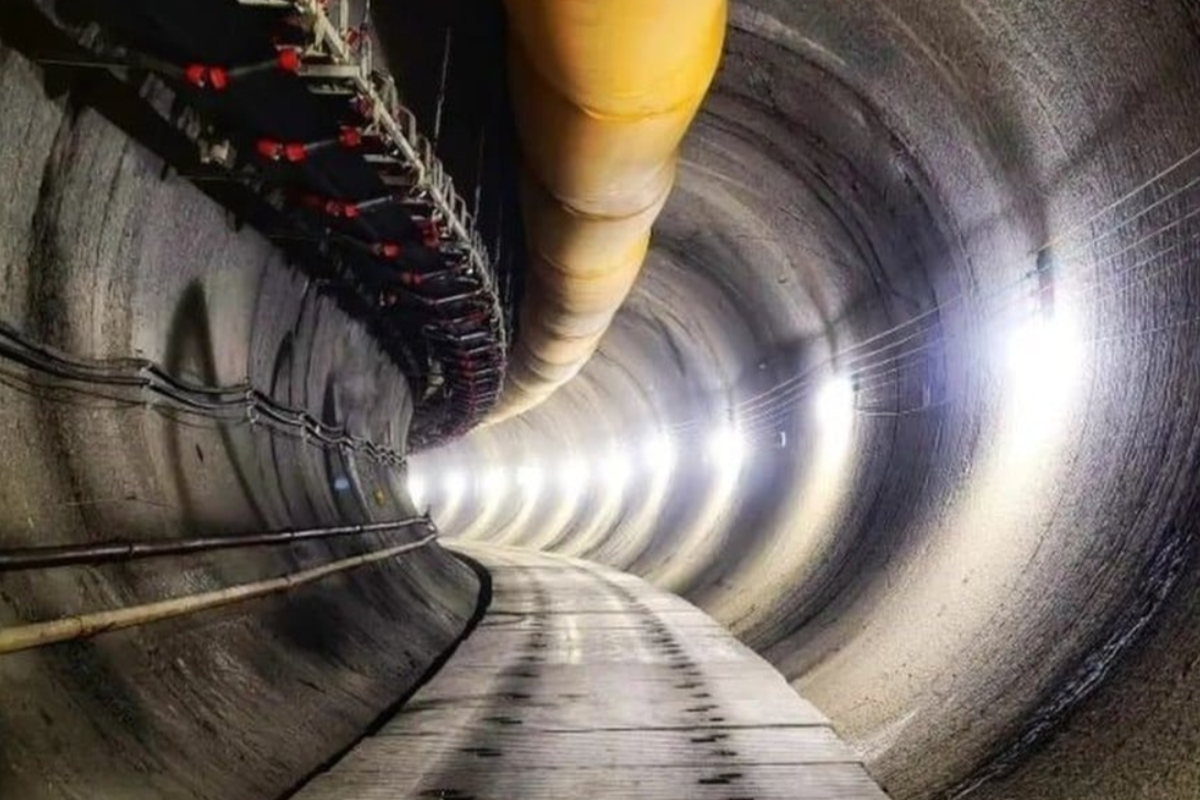
China has completed a key construction milestone at the Beishan Underground Research Laboratory, an underground facility designed to support research on long-term management of high-level radioactive waste in deep geological conditions.
The China National Nuclear Corporation (CNNC) said the project’s main access route is a spiral ramp stretching about 7 kilometers, descending to roughly 560 meters below ground in the Beishan area near Jiuquan in Gansu province. CNNC said the tunnel has a diameter of about 7 meters and drops at an average slope of around 10%.
CNNC said the spiral ramp was excavated using “Beishan No.1,” a tunnel-boring machine developed in China for hard-rock tunneling and the curved, sloping geometry required at the site.
The Beishan site has been studied for decades as China assessed geological conditions suited to isolating high-level radioactive waste over very long timeframes. The South China Morning Post reported that the new underground laboratory is being developed in the Gobi Desert region as part of China’s broader work toward a deep geological disposal pathway, following site investigations that began in the 1990s and later regulatory steps that moved the project into an execution phase.
CNNC said the facility is intended to provide a platform for experiments and verification work in a deep underground environment, supporting future planning for permanent disposal solutions for high-level waste.