Can Batteries Finally Solve the Renewable Energy Problem?
Over the past few decades, renewable energy—especially solar and wind—has seen rapid expansion. What was once considered unlikely in the 2000s is now a reality, with the solar and wind sectors accounting for a larger share of the energy market than ever before. Even in the oil-rich UAE, for instance, clean energy made up 28% of electricity generation in 2023, with 8.5% from solar and wind. In Europe, the figures are even higher, with solar and wind contributing 34.7% in the UK, 43.1% in Germany, and an impressive 69.5% in Denmark, according to Enerdata.
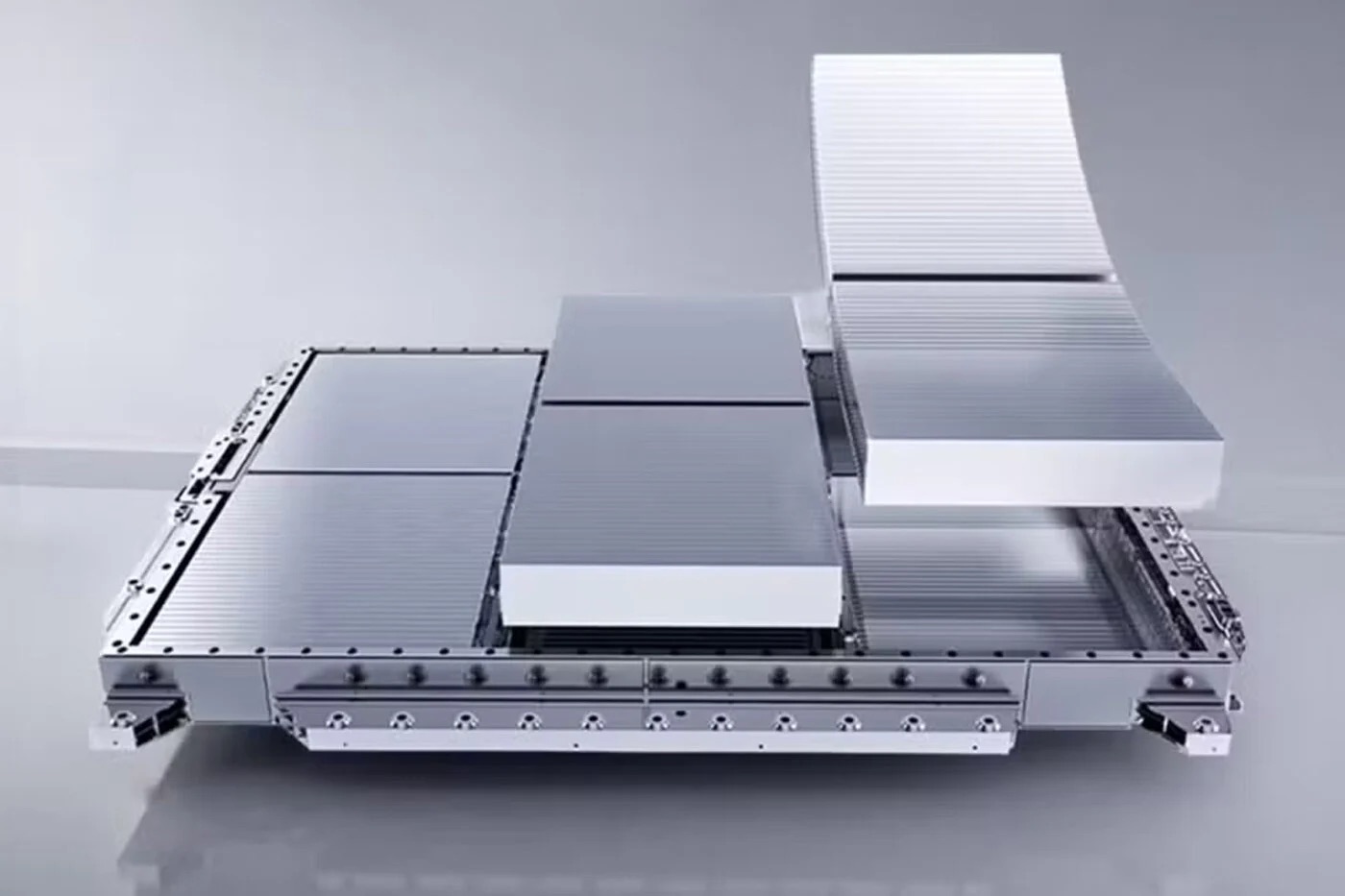
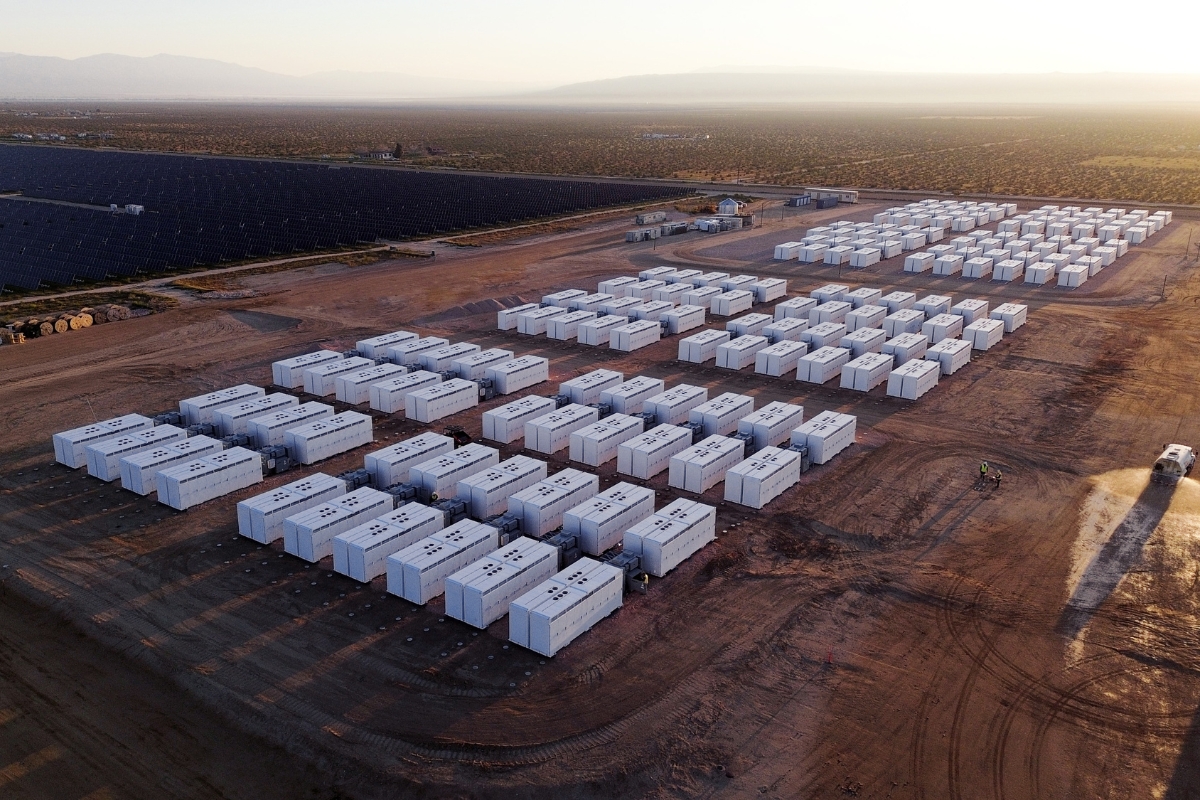
Yet, this growth of renewable energy has always had an issue: solar power is only available during daytime hours, and both solar and wind patterns are difficult to predict. These energy sources have significant upside, but are unreliable for country-wide electric grids. However, a new solution is now emerging: huge batteries the size of a shipping container.
During California’s recent record-breaking heatwave in the summer of 2025, battery storage systems supplied over 25% of the state’s electricity during evening peaks, marking the first time in years that no statewide conservation alerts were needed. As gas generation continues to decline and renewable power expands, these batteries have evolved from mere backup resources into the backbone of grid reliability.
To see the difference these batteries made, we only need to look back to August 2020 when extreme heat gripped California, and the state’s electric grid buckled under unprecedented strain. With air conditioners running nonstop, increasing demand, the grid operator ordered rolling blackouts for the first time in nearly twenty years, leaving more than 800,000 homes without power for hours. The incident revealed a fundamental weakness: reliance on intermittent renewable sources without sufficient storage to stabilize supply.
That crisis sparked a rapid expansion of energy infrastructure. Over the past five years, the state’s battery storage capacity grew by more than 3,000% — from around 500 megawatts in 2020 to approximately 15,700 megawatts by mid-2025 — changing how the grid manages supply and demand. Networks of lithium-ion batteries now store excess solar energy during the day and release it at night when usage increases and prices go up.
California’s situation is not unique but reflects a global surge in battery deployment that is transforming energy systems. BloombergNEF predicts that new worldwide battery storage installations will reach 100 gigawatts by 2025 and will more than double in 2026 as costs continue to fall.
China is leading this surge, with the China Energy Storage Alliance reporting that the country will surpass 100 gigawatts of new-energy storage capacity in 2025 — more than double its previous year’s output. This milestone marks a pivotal moment: lithium-ion batteries are set to overtake pumped hydro for the first time, becoming a key part of managing renewable surpluses across extensive regional grids.
According to S&P Global, the US grid-scale battery capacity is projected to grow five times, reaching 204 gigawatts by 2040 as utilities add more variable solar and wind energy. In 2025 alone, the U.S. capacity increased by 63%. The European Union, Australia, and emerging markets in the Middle East, South America, and Southeast Asia are also investing heavily in large-scale storage to create flexible and responsive power systems.
Much of this global competition centers on Tesla and China’s BYD — two of the most influential players in the battery industry. Tesla’s high-density 4680 cylindrical cells, made with nickel-manganese-cobalt chemistry, aim to provide long range and fast charging but require complex cooling systems to control heat. In contrast, BYD’s Blade battery uses a lithium-iron-phosphate (LFP) chemistry in a long, prismatic shape that prioritizes affordability, safety, and thermal stability over maximum energy density. The Blade’s design spreads heat evenly, reducing fire risks and maintenance costs, while Tesla’s approach enables better performance for premium systems. Analysts point out that BYD’s integrated supply chain and roughly $10 per kilowatt-hour material cost advantage give it a boost in scaling up grid projects. Meanwhile, Tesla’s technology continues to lead in speed and efficiency.
Today’s utility-scale batteries provide much more than backup power. They generate revenue through grid stabilization, frequency regulation, and price arbitrage. Operators buy excess renewable electricity — sometimes at negative prices — and sell it back during peak demand to keep the grid stable while making renewable energy economically viable. In Spain, wholesale prices dropped below zero for over 500 hours in 2025 because solar output flooded the grid. However, developers still encounter obstacles like inconsistent regulations, fragmented markets, and double-charging tariffs in certain regions.
Despite these obstacles, a broader shift is underway: energy storage is becoming the central method around which renewable energy systems operate. A July 2025 report from the Energy Transitions Commission found that “sunbelt” nations, such as India, Mexico, and much of the Middle East — where solar output follows predictable daily patterns — could meet nearly all their balancing needs using batteries alone. Meanwhile, wind-heavy countries like Germany and the United Kingdom will need hybrid solutions that combine batteries with pumped hydro, compressed air storage, and hydrogen systems to keep stability during extended power shortages.