AI Officially Outperforms Humans in Programming Competitions
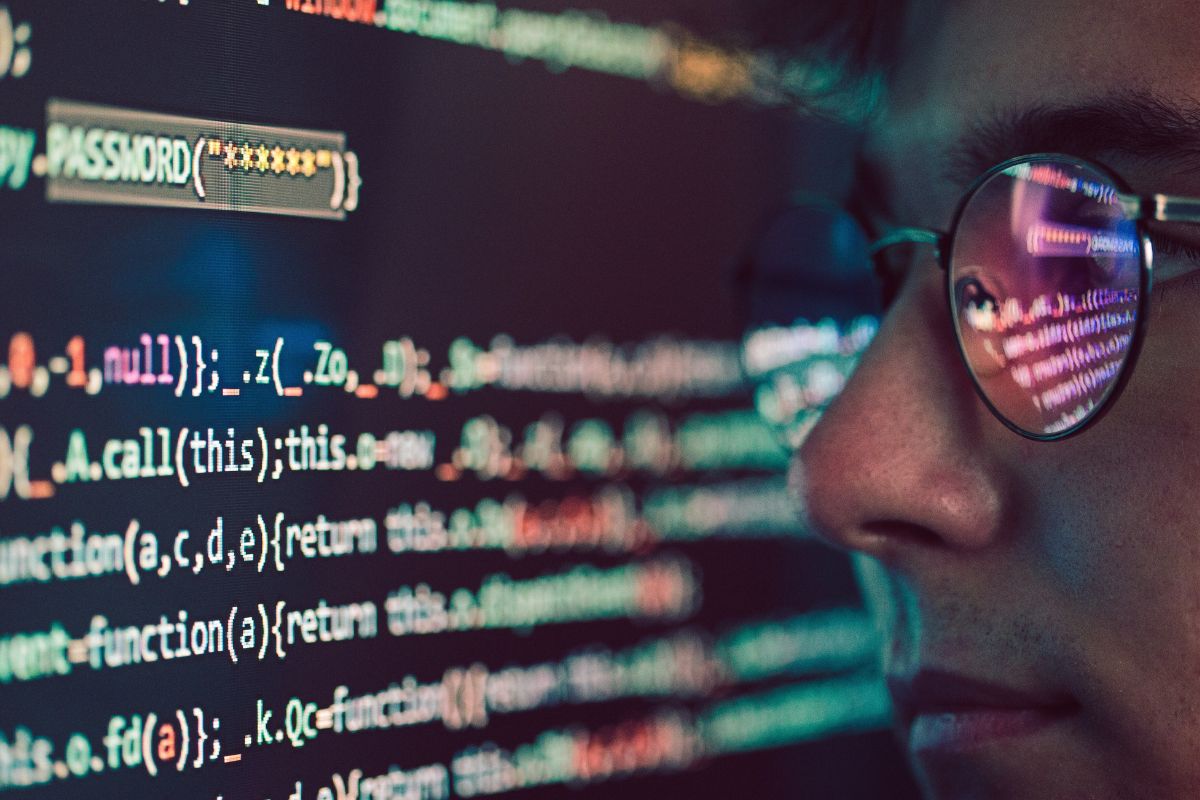
Artificial intelligence has officially surpassed human competitors in programming contests. OpenAI and Google DeepMind have tested their latest systems in several elite challenges, and the results confirm what many in the tech world have anticipated for years. After mastering board games, solving advanced math problems, and achieving near-human reasoning, AI has now conquered one of the last human strongholds: competitive programming.
Both OpenAI and DeepMind reported that their newest models would have ranked at the very top of this year’s International Collegiate Programming Contest (ICPC). Although neither company participated officially in the event, which took place in early September, internal tests showed that OpenAI’s GPT-5 would have secured first place, followed closely by DeepMind’s Gemini 2.5 Deep Think in second.
The ICPC has long been a proving ground for some of the brightest minds in computer science, including Google co-founder Sergey Brin and OpenAI’s chief scientist Jakub Pachocki. The competition challenges teams of three students to solve 12 complex programming problems using a single computer within five hours. The tasks demand not only technical proficiency but also abstract reasoning, creativity, and flawless execution.
This year, the top human team managed to solve 10 problems. OpenAI announced that GPT-5 solved all 12, with 11 correct on the first attempt. DeepMind’s Gemini 2.5 completed several problems that no human team could finish.
“This is a historic moment on the path to artificial general intelligence,” said Quoc Le, Vice President at Google DeepMind, in comments published by the Financial Times.
For OpenAI, the results highlight the progress of GPT-5, which was used to solve all but the final and most challenging problem. That task required a hybrid approach combining GPT-5 with an experimental model still in development. DeepMind, on the other hand, trained Gemini 2.5 through a mix of reinforcement learning, intensive problem-solving practice in mathematics and reasoning, and large-scale programming challenges.
Experts in the competitive programming community have expressed astonishment. Jelani Nelson, Professor of Electrical Engineering and Computer Science at the University of California, Berkeley, said, “It is remarkable that a purely artificial system, operating without human assistance, could achieve this level of performance. If someone had told me a few years ago that technology would reach this point in mathematics and computer science, I would not have believed it.”
Others, however, have urged caution. Some observers warn against interpreting these results as proof that AI can yet replace human software engineers, pointing out that the ICPC rewards speed and performance under pressure, which do not necessarily reflect the complexity of real-world software design.
DeepMind acknowledged that Gemini 2.5 did not perfectly match the performance of the best human teams, sometimes failing to solve problems they completed successfully. However, the company noted that the model produced original solutions that no human competitor attempted, suggesting a future in which AI can enhance human intelligence by offering entirely new approaches to difficult problems.