Architecting 6G for the AI age: Qualcomm’s vision for the next wireless era
After the great success the telecom industry achieved with the 5G rollout, eyes are once again on the industry as Wi-Fi 8 makes waves and 6G is just around the corner. With such transformations coinciding with AI taking a larger share of the cultural zeitgeist, we attended Mobile World Congress 2026 in Barcelona, where Cristiano Amon, CEO of Qualcomm, delivered a keynote outlining what could become the next defining shift in wireless technology.
Speaking at MWC, Amon described 6G not as a simple upgrade over current networks, but as a generational transformation designed for a world increasingly powered by artificial intelligence. If the smartphone era was enabled by 4G and accelerated by 5G, the next decade may be defined by intelligent systems that continuouslyinteract with users, environments, and devices. In Amon’s view, 6G will become the wireless foundation for what he calls “AI everywhere.”
From Mobile Broadband to the AI-Native Network
Cristiano Amon, CEO of Qualcomm at MWC 2026
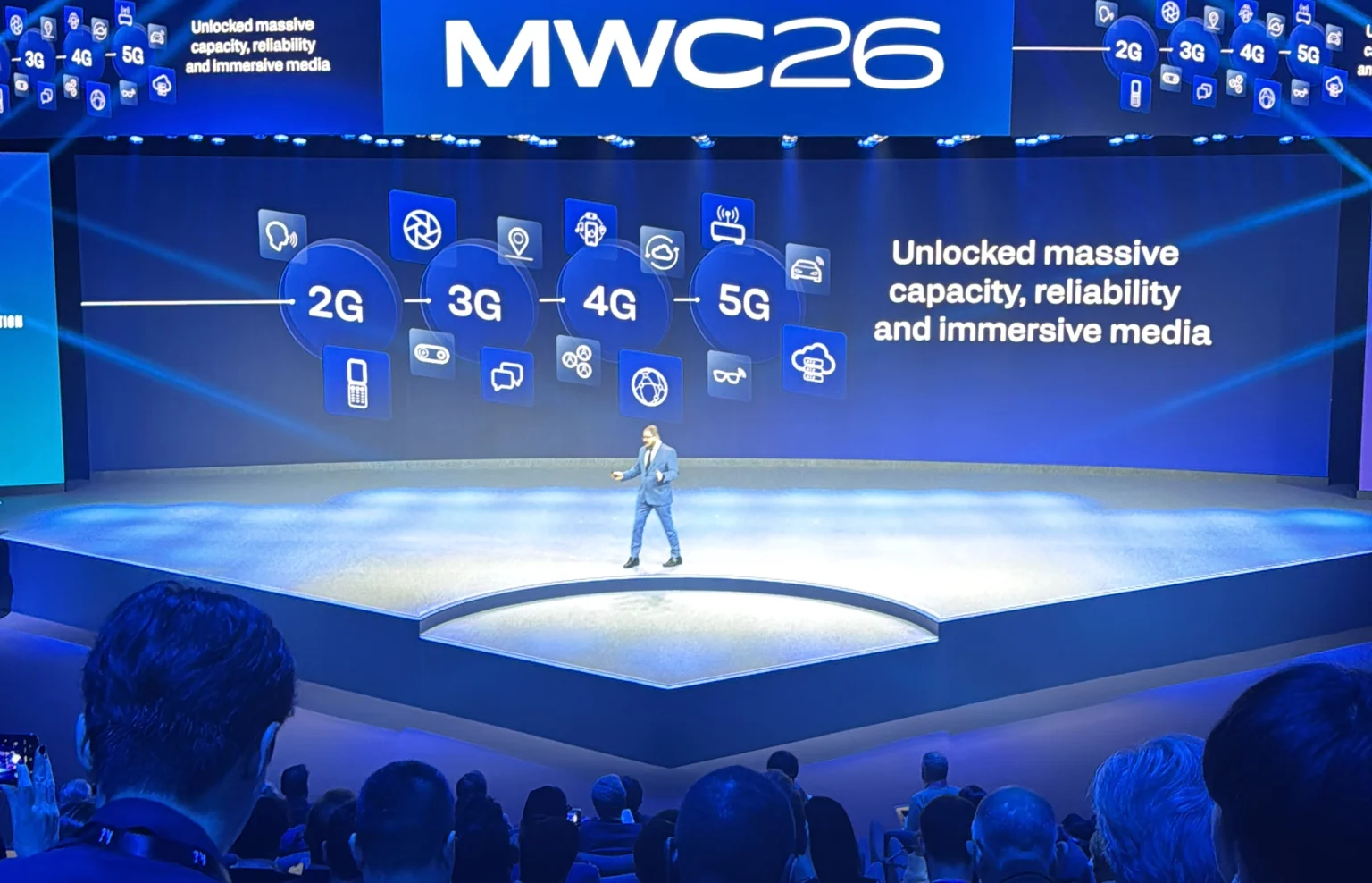
Wireless technology historically evolved in roughly decade-long cycles, each generation enabling a new digital transformation. According to Amon, 2G made mobile phones widely accessible, 3G connected devices to the internet, and 4G enabled the global smartphone revolution. The current 5G era has focused on delivering high-capacity networks capable of supporting streaming, video conferencing, and massive data consumption. But the next stage of evolution will be driven by artificial intelligence.
AI is already reshaping computing, interfaces, and digital services. As intelligent systems begin to power everything from personal devices to autonomous machines, networks will face unprecedented pressure. Cellular traffic is expected to grow between three and seven times by 2034, with AI applications alone accounting for roughly 30% of that increase.
This surge will not come only from smartphones. Amon highlighted the emergence of entirely new device categories, such as personal AI assistants, connected vehicles, industrial robots, and immersive wearables, all generating continuous streams of data. Supporting this ecosystem will require networks that are faster, more responsive, and far more intelligent than those that exist today.
The Rise of the Agent-Centric Ecosystem
Cristiano Amon, CEO of Qualcomm at MWC 2026
One of the most important shifts Amon described is the transition from an app-centric digital ecosystem to an agent-centric one. Today, most digital interactions take place through smartphone applications. Even devices like smartwatches or earbuds function primarily as extensions of the phone. But AI agents are changing that structure.
Rather than manually opening apps and navigating menus, users will increasingly rely on intelligent systems that can interpret intent, observe context, and perform tasks automatically. These agents will coordinate interactions across multiple devices simultaneously, responding to voice commands, visual input, and environmental data.
In this model, the smartphone will no longer sit at the center of the ecosystem. Instead, the agent becomes the organizing layer that connects devices, services, and data. Such a system requires continuous awareness of the user’s surroundings and real-time access to contextual information. Devices such as smart glasses, sensors, and vehicles will constantly generate data about what users see, hear, and experience.
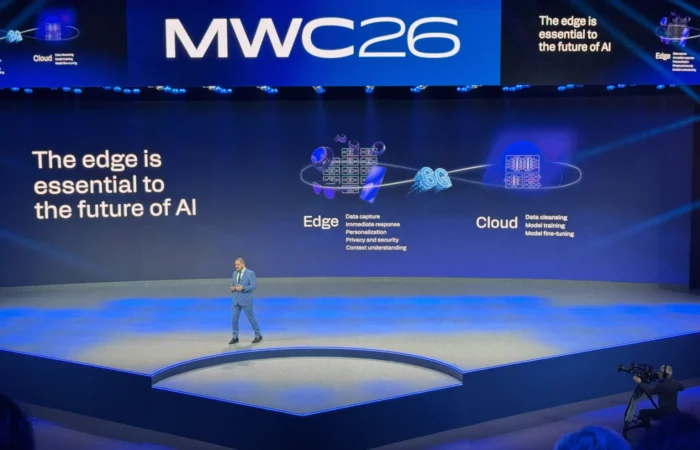
This shift dramatically increases the importance of edge computing and network responsiveness, necessitating wireless infrastructure specifically designed to support AI-driven experiences.
The Three Pillars of 6G Architecture
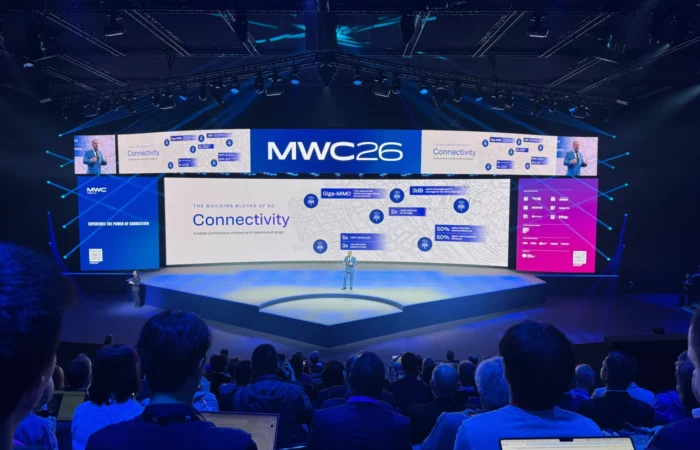
Cristiano Amon, CEO of Qualcomm at MWC 2026
To support this new computing paradigm, Qualcomm envisions 6G networks built on three foundational pillars: connectivity, computing, and sensing.
Connectivity will remain essential, but it will evolve dramatically. Qualcomm’s design targets include a 50–70% performance improvement across key spectrum bands, along with major increases in uplink capacity and network throughput. The emphasis on uplink performance reflects how data flows will change in an AI-driven world. Devices such as augmented reality glasses, industrial sensors, and connected vehicles will continuously transmit large volumes of visual and contextual data to the network.
Artificial intelligence will also play a direct role in managing wireless signals themselves. Instead of relying solely on traditional signal estimation techniques, AI models will help predict channel behavior and compensate for signal limitations. This approach could allow higher-frequency spectrum bands to deliver strong coverage without the trade-offs typically associated with them.
Beyond connectivity, the network itself will evolve into a computing platform. In the 6G architecture, processing capabilities will be integrated throughout the infrastructure, from base stations to edge facilities and large data centers. Telecom networks will increasingly function as distributed AI systems, capable of analyzing data in real time before sending it to centralized cloud platforms.
The third pillar, sensing, introduces an entirely new capability for wireless networks. By analyzing radio signals across the network, operators could detect and map objects within the environment. This would effectively turn wireless infrastructure into a large-scale sensing system capable of generating detailed 3D maps of cities or tracking movement across urban environments.
Such capabilities could enable applications ranging from drone detection and airspace monitoring to traffic analysis and autonomous transportation systems.
Building the Infrastructure for AI Everywhere
Amon described scenarios where smart glasses connected to AI agents could identify objects in the physical world, assist with shopping decisions, or communicate with friends in real time. In enterprise environments, wearable devices could stream live visual data to remote experts or AI assistants, enabling real-time guidance during complex operations.
Beyond individual experiences, the combination of connectivity, computing, and sensing could unlock entirely new business models. Telecom networks could provide services related to environmental awareness, infrastructure monitoring, and large-scale data collection for AI systems.
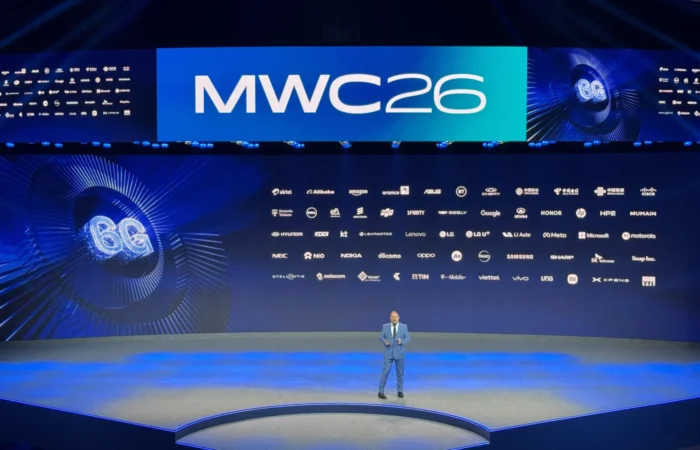
Although commercial deployment remains years away, Qualcomm and its partners are already moving toward early 6G demonstrations by 2028. A coalition of dozens of companies across the telecom ecosystem has joined efforts to help define the technologies and standards required for the next generation of wireless connectivity.
If the vision outlined at MWC becomes reality, 6G will not simply deliver faster mobile data. Instead, it could transform wireless networks into intelligent platforms capable of supporting the next era of computing, one where artificial intelligence operates seamlessly across devices, environments, and industries.