Growth while preparing for a new mobility era: Geely’s plan for the Middle East
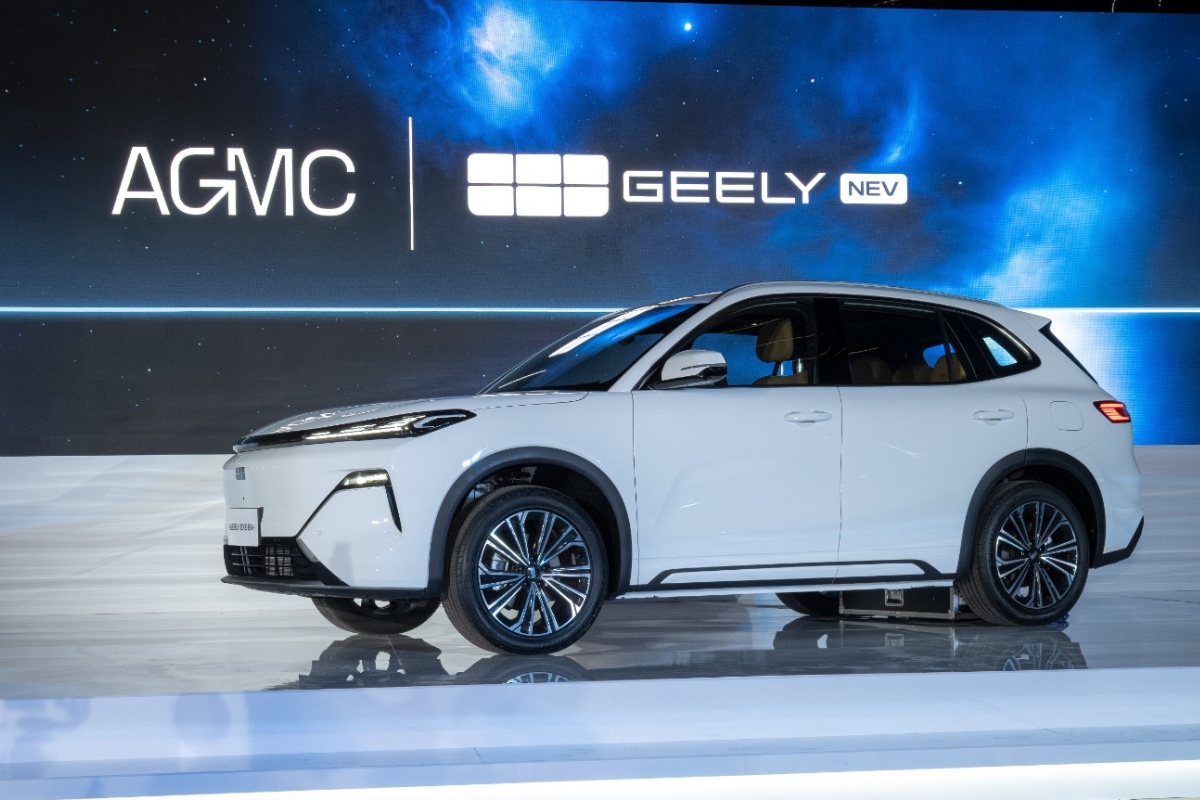
After an outstanding year of outsized growth in the UAE auto market, Geely is repositioning itself for what its leadership describes as a fundamental shift in mobility, one that goes beyond selling more cars and toward building a parallel, electrified business ecosystem in the region.
Speaking during a recent closed-door roundtable with regional media, Geely executives outlined how the brand is transitioning from rapid market expansion into a long-term strategic phase focused on electrification, localization, and organizational restructuring.
Outperforming the Market Through Consistency
Geely’s recent performance in the UAE stands out against broader market conditions. While the passenger vehicle market remained largely flat at approximately 324,000 units, the brand recorded 46% year-on-year growth, surpassing 13,000 vehicles sold nationwide, according to Dr. Andreas Schaaf, Director of Al Batha Automotive Group, which oversees Geely sales in the UAE.

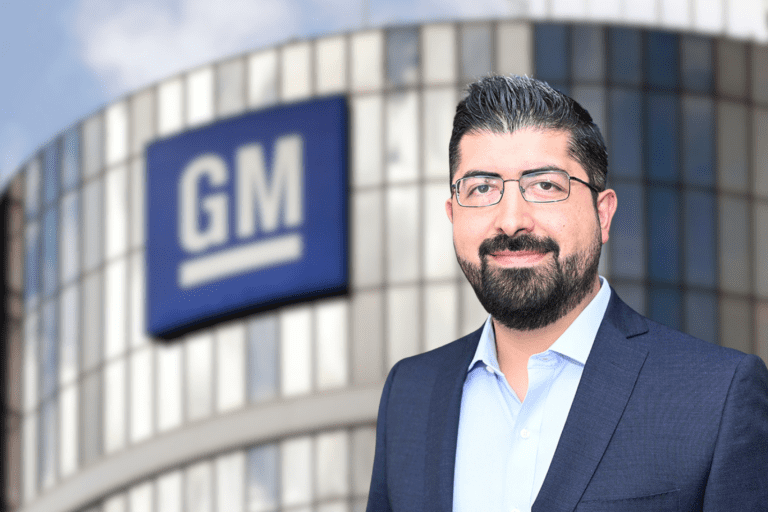
Dr. Andreas Schaaf, Director of Al Batha Automotive Group
“We grew 46% last year in a stagnant market, and for the first time, Geely has achieved over thirteen thousand vehicles in the UAE,” Schaaf said. “That puts us at almost 5% market share.”
That performance propelled Geely into the UAE’s top ten automakers by sales, overtaking several long-established American, European, and Korean brands. Schaaf continues: “We came from almost zero. Now we are number six in the market.”
Keeping the momentum long-term
Despite the strong results, Geely’s leadership stressed that the performance is not a flash in the pan, but rather a sign that the company has reached a strategic inflection point. “Today, we are at a very important strategic junction for the business,” Schaaf said. “We believe we are entering a new era of mobility in the UAE.”
Rather than pursuing incremental expansion, Geely plans to establish a second independent business unit for electrified mobility, which will require a new structure and significant investment. “We will build up an entirely second business unit for new mobility vehicles,” Schaaf explained. “Separate organization, separate outlets, separate dedicated staff, and massive investments.”
Organizational restructuring and global alignment
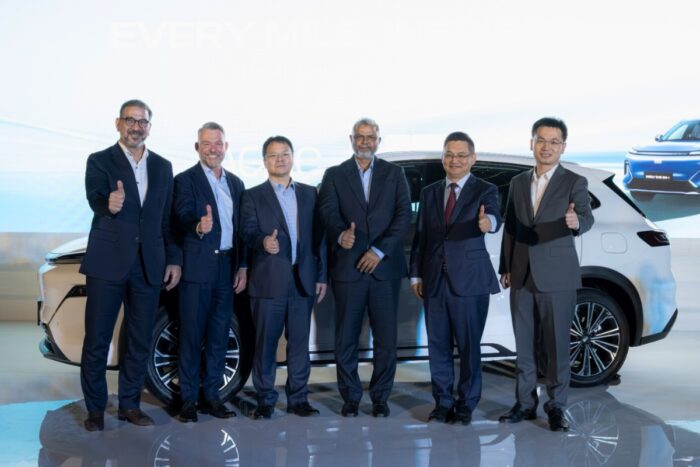
Geely’s UAE team
At the group level, Geely is undergoing a significant structural transformation. Tian Jinjun, CEO of Geely Auto Middle East, described the shift as a move toward operating as a single, globally integrated organization. “By the end of 2024, Geely Holding Group officially announced the Taizhou Declaration,” Tian said about the global restructuring event that transformed Geely’s business and was seen as a great push forward.
In the Middle East, this resulted in the consolidation of previously separate regional teams. Tian explains that the company previously had multiple teams, each for Geely, Geely New Energy, Lynk & Co, and Zeekr. The plan is to combine them into a single, cohesive team.
Global scale backing regional ambition
The regional strategy reflects Geely’s wider global ambitions. Tian highlighted the group’s scale, noting: “In 2025, Geely Holding Group sold more than 4.12 million vehicles globally, ranking seventh worldwide.”
Looking ahead, the group has outlined an ambitious target for the end of the decade. Tian said, “By 2030, our sales target is 6.5 million, which would place us among the global top five.” He also sat a very ambitious target for electrification: “New energy vehicles will contribute around 75% of sales volume globally by then.”
For the Middle East specifically, Tian framed Geely’s strategy simply: “We do business here, so we must localize our products, localize the team, and establish the ecosystem for the local consumer.” Concrete steps already underway include a regional spare parts hub and localized digital infrastructure. “We established our spare parts center in Jebel Ali Free Trade Zone to cut the lead time,” Tian noted. “And all vehicle data will be stored on local servers to protect consumer information.”
Tian also spoke about the regional variations and how the company modifies its cars to work across varying climates and regions: “In China, the temperature is not so high like here, so we must guarantee our vehicles are compliant with the climate, road conditions, and regulations of this market.”
A connected vehicle ecosystem
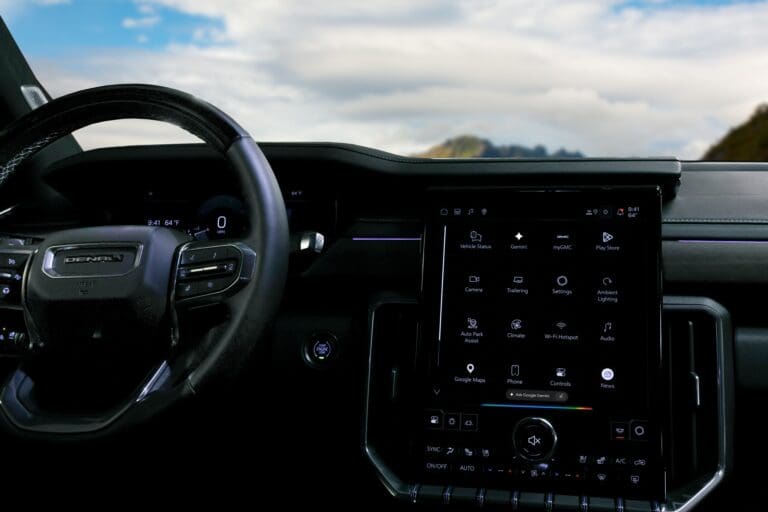
Connectivity was highlighted as a major differentiator for Geely’s next phase. The company plans to introduce fully connected vehicle features across mainstream models, not just premium lines. “This year, three models will be connected,” Tian confirmed. “Step by step, all vehicles will have this function.”
Schaaf emphasized the customer value behind this move: “Fully connected vehicles add a lot of customer value. You usually see this in premium brands, but not in the mainstream market.”
Eyeing a top-three position
Geely’s leadership made no attempt to downplay its ambitions in the UAE. “There is no reason why the number one, two, or three should stay the number one, two, or three,” Schaaf said. “We have everything to overtake them.”
With a dual-track strategy, scaling a proven ICE business while launching a dedicated electrified mobility arm, Geely is positioning itself not just to grow, but to reshape its competitive standing in the region. “This is just the start of it,” Schaaf concluded. “The future will look very different.”