2025 Year in Review: the Middle East
In 2025, the Middle East experienced major developments, including geopolitical tensions, trade deals, and oil price changes. Yet, tech remains one of the most important sectors to grow this year.
Deals were signed, investments were allocated, and new ecosystems grew rapidly. With agreements in the UAE, Saudi Arabia, and other regional developments, 2025 might have been one of the most transformative years for tech in the Middle East. As 2025 comes to a close, major trends include:
Data Center Investments on the Rise
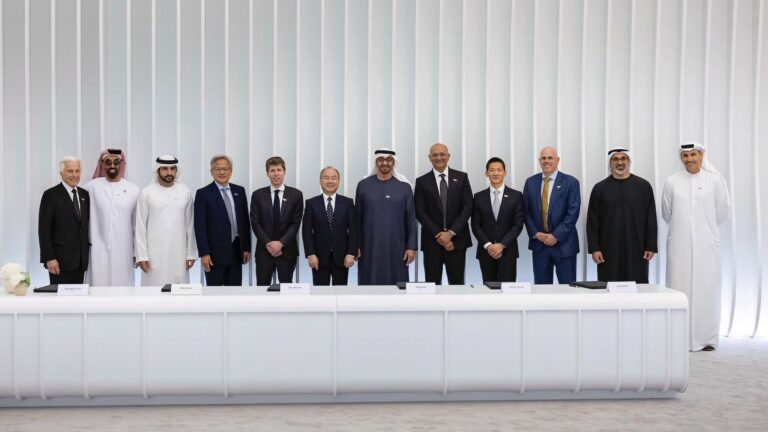
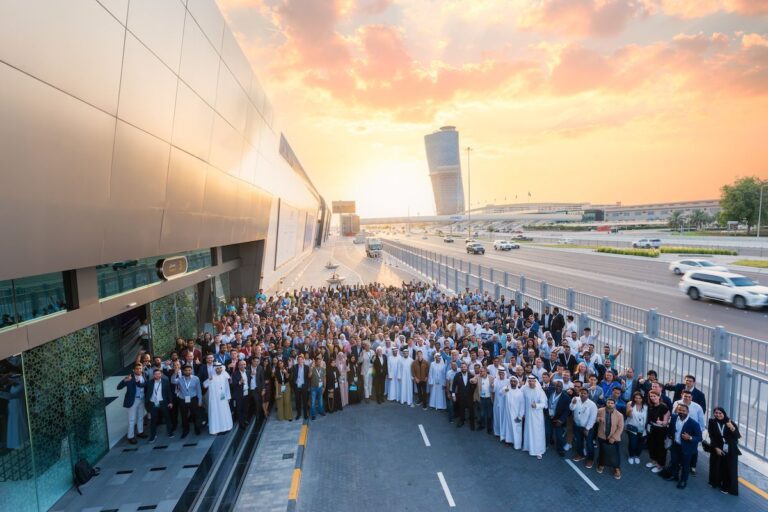
Leader participating in Stargate UAE
In May 2025, Stargate UAE was announced as one of the world’s largest AI projects. It is being developed as part of the 5-gigawatt “UAE–U.S. AI Campus.” Development is already underway in Abu Dhabi, with UAE-based G42 leading the initiative alongside global partners like OpenAI, Oracle, Nvidia, Cisco, and others.
Other AI infrastructure investments are also increasing. One of the year’s biggest announcements was Microsoft’s plan to invest $15.2 billion in the UAE’s AI ecosystem by 2029. The company is also sending tens of thousands of Nvidia AI chips to be used in new data centers in the country.
A New AI Giant Is Emerging
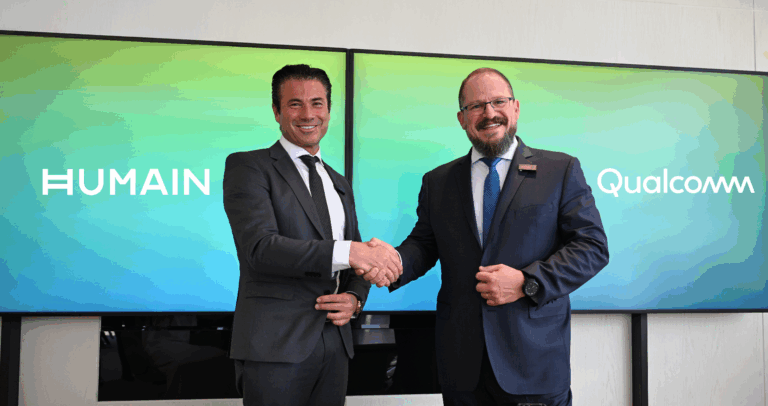
Also in May, Saudi Arabia’s PIF announced the creation of HUMAIN, a new AI company aiming “to build the world’s leading full-stack AI platform to enhance human capabilities on a global scale.” The new entity wasted no time, announcing a $5 billion joint “AI Zone” with AWS, signing a $3 billion deal with Blackstone-backed AirTrunk, and, most significantly, forming a $10 billion joint venture with chipmaker AMD.
The company also launched HUMAIN Chat, powered by ALLAM 34B, the largest Arabic-first AI model. However, HUMAIN is not limited to software and data centers; the company also introduced the Horizon Pro laptop, which is powered by a Qualcomm chip, and plans to power it with the company’s own “HUMAIN OS”.
Fragility of the Internet Becomes Apparent
In September, multiple submarine internet cables were cut, leading to network disruptions, slower internet speeds, and increased latency across the GCC, Pakistan, and India. The incident was compared to the 2008 disruption that caused similar issues throughout the Middle East and North Africa region. This case is more limited in scope, and although it’s not fully resolved, the impact was mild.
The causes of the cable incident are unknown, but the leading theory blames commercial shipping activity, as the Red Sea is one of the world’s busiest waterways. In all cases, the incident served as a stark reminder of the internet’s fragility and the need for alternatives.